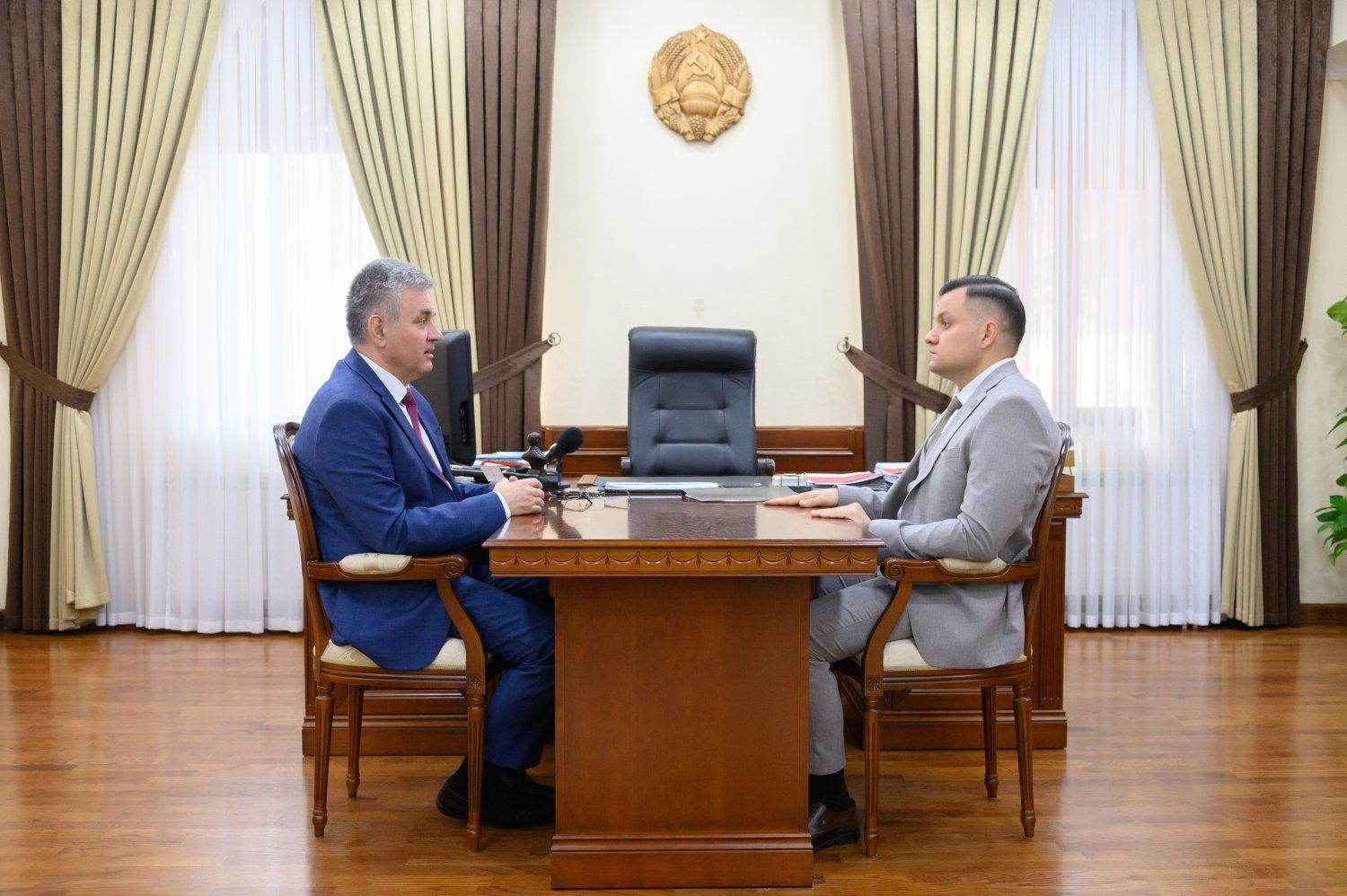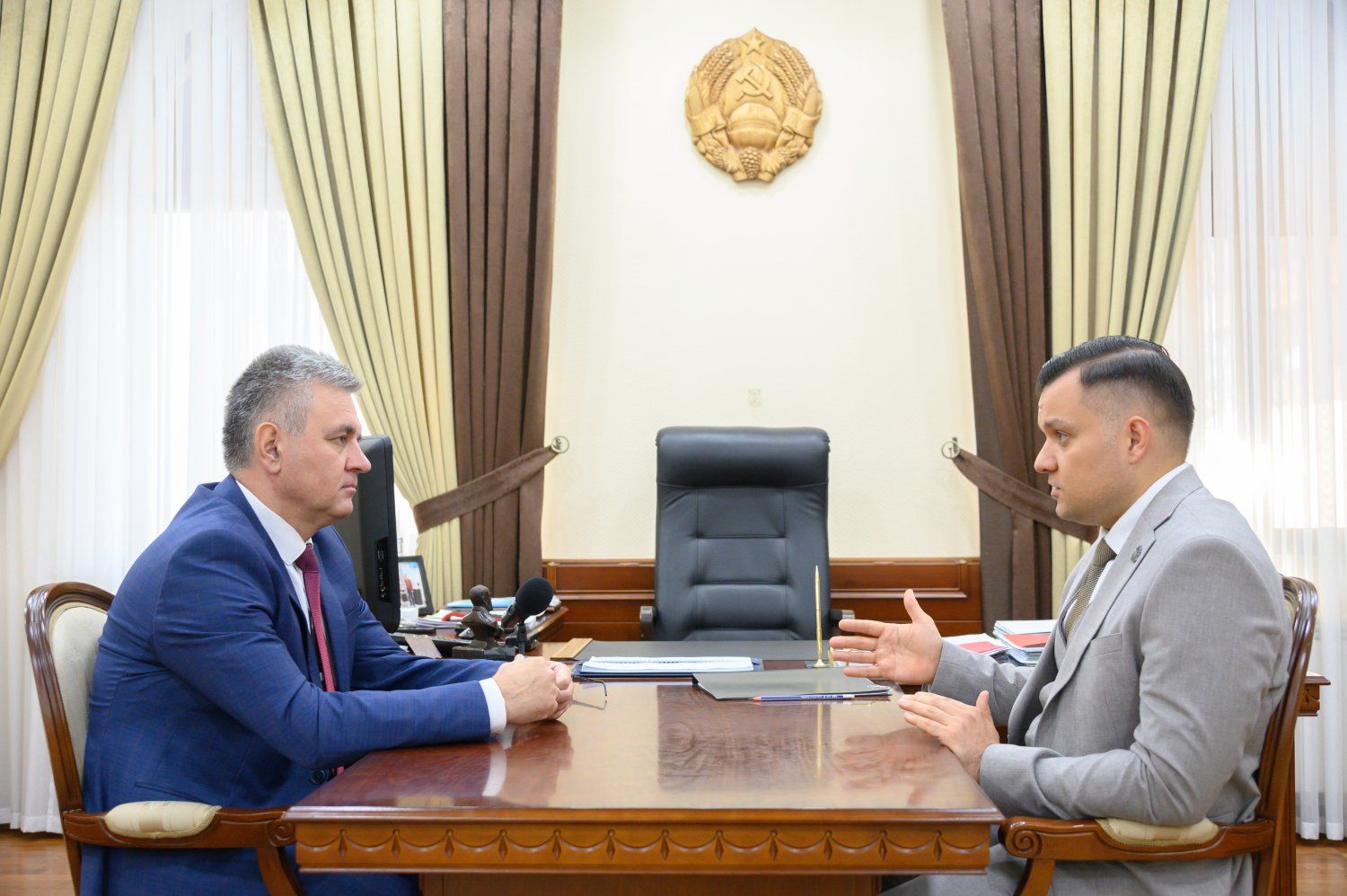
The PMR President held a working meeting in his office with the Minister of Agriculture and Natural Resources of the PMR. Igor Palamarchuk outlined the current situation in the agricultural sector. According to him, 2200 land users are engaged in crop production this year: 300 legal entities and 1900 peasant-farm enterprises. The highest number of peasant-farm enterprises is in Rybnitsa District (576), while the highest number of agricultural enterprises is located in Slobodzeya District (145), according to statistics. A total of 281 economic entities maintain perennial plantations. Regarding sown areas, the republic has over 216000 hectares (73% of all land). Almost 60% (126000 hectares) is dedicated to grain and leguminous crops, 38% to industrial crops, and 2.5% to fodder crops. Vegetables, melons, and potatoes were grown on 2338 hectares this year.
The main grain crops cultivated are winter wheat, barley, and corn. The area dedicated to legumes has quadrupled over the past three years; 16000 hectares were planted with peas, chickpeas, and lentils this year. The Minister highlighted the growing demand for these crops, particularly lentils. Sorghum was introduced into the crop rotation in 2021, and 1600 hectares sown with this drought-resistant crop.
A prolonged spring in 2026 delayed the start of the harvest campaign by a week, but farmers managed to complete the work successfully. The harvest of "first-group" grains (early cereals) was completed by mid-August. Over 486000 tons were harvested, with an average yield of 46.1 centners per hectare. Winter wheat figures are notably higher than projected, reaching 385.9 thousand tonnes (49.8 centners/ha). The country's domestic demand for bread has been fully met, and export potential has increased. The highest winter wheat yield this year was recorded in Rybnitsa district (53.7 centners/ha), while the largest volume of grain was harvested in Grigoriopol district (114.9 thousand tonnes). The leader in yield was Polyus-Agro LLC (Kamenka district) at 88 centners/ha. Producers in Rybnitsa district surpassed the 70 centners/ha mark: Stary Melnik LLC (77.4 centners/ha) and Selen LLC (72.8 centners/ha).
Here are further figures from the report. The total harvest of winter barley amounted to 31.3 thousand tonnes – 10.3 thousand tonnes higher than the 2025 level with an average yield of 48.8 centners/ha, compared to 35.1 centners/ha in 2025. Spring barley production reached 13.2 thousand tonnes – double the 2025 figure, driven by both a 1400-hectare increase in sown area and a yield increase of 5.5 centners/ha. Spring wheat production totaled 13200 tonnes, up from 8600 tonnes in 2025, due to a 600-hectare increase in sown area and a yield increase of 7 centners/ha. Rye production amounted to 4.7 thousand tonnes, oats to 465 tonnes, and triticale to 1430 tonnes. The total harvest of grain peas was 18.9 thousand tonnes (compared to 20.3 thousand tonnes in 2025), despite a 2900-hectare reduction in sown area. The yield was 7.8 centners per hectare higher. The total lentil harvest amounted to 16.9 thousand tonnes, compared to 5.7 thousand tonnes in 2025; this increase was driven by a doubling of the sown area and a yield increase of 8 centners per hectare. Chickpea production totaled 3 thousand tonnes. Rapeseed output was 42,100 tonnes with a yield of 24.8 centners per hectare – 8 thousand tonnes less than in 2025 due to a 4.9-thousand-hectare reduction in acreage. Mustard production totaled 1300 tonnes, while the total flax harvest was 5.3 thousand tonnes – 2.3 times the 2025 figure resulting from both a 1,300-hectare increase in sown area and a rise in yield from 7.1 to 12.5 centners per hectare.
The Minister reported that while last year was considered highly successful for land users, this year’s total harvest is 39% higher. Igor Palamarchuk emphasized that the yield and total harvest volume for the first group of grain and leguminous crops have reached a ten-year high. Contributing factors included the accumulation of productive soil moisture, high-quality seed stock, and timely agrotechnical operations.
Sunflower and corn harvesting is currently underway, with promising forecasts; yields are currently averaging 20 centners per hectare.
Discussions touched upon the development of the land reclamation infrastructure. Vadim Krasnoselsky emphasized the importance of this program’s continued operation. The weather conditions that favored land users this year will not always be so generous with moisture; the President emphasized that both farmers and the state must be prepared for nature's unpredictability.
The PMR President inquired about the supply of fruits and vegetables. Harvest figures include 1200 tons of potatoes, 2815 tons of green peas, 8100 tons of sweet corn, and 1125 tons of melons and gourds. Stocks of potatoes, onions, beets, carrots, and cabbage are sufficient to supply social institutions. Fruit harvests totaled 3200 tons, comprising 865 tons of sweet cherries, 985 tons of sour cherries, 190 tons of apricots, 307 tons of peaches, and 726 tons of plums. Harvesting continues in peach and plum orchards. Berry production reached 132 tons this year, while the grape harvest currently stands at 4400 tons. According to the Minister of Agriculture, food security is ensured across all categories. The Republic is fully self-sufficient in vegetables; only early-season potatoes are actively imported. This is because consumer demand for these items arises before local climatic conditions allow for their cultivation. Certain vegetables are grown not only for the domestic market but also for export. The minister reported a surplus of cucumbers and watermelons this year.
The livestock sector is seeing rising production volumes and a gradual shift toward import substitution, with priority given to chilled rather than frozen products. Pridnestrovian producers fully meet domestic demand for poultry meat, and herds of both pigs and cattle are expanding. Significant progress has been made in chicken egg production; the primary supplier in this sector is a Dubossary-based enterprise that has reached an annual output of 6 million eggs.
Vadim Krasnoselsky urged that conscientious agricultural producers who are committed to growth be not only supported but also encouraged. The President announced plans to pay working visits to a number of the republic's agricultural enterprises in the near future.