Alexander Lagutin, RIA News Agency:
Pridnestrovie is currently experiencing colossal economic pressure from Moldova. Chisinau is using various information provocations against this backdrop. What do you say about this?
The PMR President Vadim Krasnoselsky:
Economic pressure on Pridnestrovie from Moldova is not something that happens "now". It always happens, to a greater or lesser degree. Unfortunately, it's usually escalating, of course. Today, the Pridnestrovian economy is caught in the crossfire of geopolitical circumstances. Military action in neighboring Ukraine, closed borders with Ukraine, and global upheavals – all of this is clearly not to our advantage. Support from Moldova would certainly be very helpful in these extremely difficult circumstances. Okay, not support, but at least the absence of obstacles. But no. The previous restrictions remain in place, and new difficulties are cropping up. You've surely heard about plans related to a certain fund – according to Moldovan politicians and officials, a real lifesaver for Pridnestrovie – and about supposed tax breaks for Pridnestrovian entrepreneurs. It might seem to the uninitiated as if Moldova has practically conferred a favor on Pridnestrovie. What's the reality? Pridnestrovians have been hampered in their entrepreneurial activities before, and now they're trying to crush them with double taxation in reality. Where has it ever been seen that taxes go into one budget, while social expenses are covered from another – one that they simply won't allow to be replenished? Regarding the talk of the fund, it sounds like we'll be replenishing it, and Moldova will be spending it. They claim it's for the needs of Pridnestrovie. What does Moldova know about our needs? The Moldovan side isn't listening to us, or rather, isn't even listening, refusing dialogue and the negotiation process. We propose: since you're determined to create a new fund using our taxes, let us decide where this money will be spent and oversee its spending. No. Moldova doesn't accept this option. We also don't accept that "they married me off without me" scenario. What kind of decision-making is this, made in a "dark room"? Take our Capital Investment Fund. Everything is open, clear, and transparent. The people see the results. They understand, they feel for themselves, how two billion rubles are spent. What's important is that everything is done at their request. 600 social infrastructure facilities have been renovated or built from scratch in eight years. Ninety schools, 80 kindergartens, fifty administrative buildings, multi-story residential buildings, more than sixty medical facilities, a similar number of sports and cultural institutions, approximately 30 vocational and continuing education institutions, and 28 correctional institutions – all of this has been commissioned using Capital Investment Fund funds. The capital investment program is ongoing even now, despite all the difficulties. Around 60 projects are underway across the republic. Moreover, it's not just the central part or the cities that are being improved. A third of the capital investment program projects are rural. In the most remote corners, schools are being renovated, first-aid stations and rural outpatient clinics are opening, and sports grounds are being equipped. All of this is in demand. The latest "Leather Ball" tournament concluded just recently. Four thousand schoolchildren prepare for and participate in these multi-stage competitions every year. Would there be such interest without the infrastructure? I doubt it. It is across the board. We listen to our citizens and know what the people of Pridnestrovie need. Environmental issues related to the pollution of the Dniester River are particularly pressing right now. A temporary stay center or, if necessary, accommodation for adults with special needs is needed. Roads need repairs. These are areas in which investment can and should be made. We propose: let's discuss. So far, the Moldovan side has refused to engage on this issue, as on many others. Meanwhile, we continue to live and work for the benefit of the Pridnestrovian people.
Alexander Lagutin, RIA News Agency:
What about Pridnestrovian industry? Does the problem of forced idle enterprises persist?
The PMR President Vadim Krasnoselsky:
Unfortunately, yes. Nearly two dozen large and medium-sized enterprises in the republic were forced to temporarily change their operating schedules in the first quarter of this year, due to ongoing adverse circumstances. Eleven of them went on idle, resulting in 2500 employees being sent on leave without pay or with partial pay. Some enterprises switched to part-time work. This measure affected 1500 employees. To put this in perspective, we are talking about such large plants as Moldavizolit, Moldavkabel, Elektromash, Bendery Machine-Building Plant, the Tirotex factory, and other enterprises exporting Pridnestrovian products. People are without a livelihood, the budget is without tax revenues, orders are falling through, and fulfilling contracts and establishing commercial partnerships is becoming increasingly difficult for businesses. Returning to the previous question, it is under these circumstances that they want to impose new taxes on us.
Alexander Lagutin, RIA News Agency:
Moldovan representatives constantly state that the "5+2" negotiation process is dysfunctional and practically non-existent, while the meetings between negotiators from Chisinau and Tiraspol are purely businesslike. Why do you think Moldovan politicians are discrediting all dialogue platforms with Pridnestrovie?
The PMR President Vadim Krasnoselsky:
I partially agree with the Moldovan side with this. The meetings between negotiators are indeed businesslike. Or rather, they should be. I have said repeatedly and I will repeat: a full-fledged, comprehensive negotiation process presupposes high-level dialogue and decision-making. Meetings of political representatives and working group sessions are extremely important and necessary formats, but they are more preparatory and consultative. Their purpose is to articulate positions in advance, exchange opinions, identify problems, and propose solutions. What do we have? Negotiators are talking, but not reaching any agreement. This is a tongue-twister, not a negotiating process. We need high-level meetings, we need the full-fledged work of the "5+2" format; decisions must be made, agreements implemented, and their legal implementation by each side. Meanwhile, we have a negotiating platform that has been idle since 2019 due to Moldova's fault. Why does Moldova need this? Apparently, because Pridnestrovie has a voice in this platform – exactly the same as Moldova. Moldova is unwilling to listen to us or allow its international partners to hear position of Pridnestrovie.
Alexander Lagutin, RIA News Agency:
Moldova is increasing pressure on the OGRV, constantly declaring the need to withdraw Russian troops and transform the peacekeeping operation. What risks and threats does this pose to peace on the banks of the Dniester?
The PMR President Vadim Krasnoselsky:
Peacekeepers have been and remain on the banks of the Dniester, meaning peace is protected. There are risks for Moldova itself, which, with such decisions and actions, discredits itself in the eyes of the international community, as well as its own citizens.
Alexander Lagutin, RIA News Agency:
A Moldovan MP recently stated that the introduction of the Moldovan lei in Pridnestrovie is being discussed with Tiraspol. Is this true?
The PMR President Vadim Krasnoselsky:
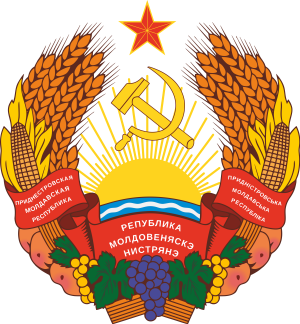
The Moldovan deputy is discussing something with someone perhaps, that's their right. Freedom of speech has not been abolished. That doesn't mean their words should be taken at face value, whether it's a kopeck or lei. You know how they teach children: ears to listen, head to think. We've been defending our independence and self-sufficiency for three and a half decades. Our financial system will literally celebrate its 35th anniversary this month. What is a financial system? It's the budget, tax, banking, and monetary systems, of course. Pridnestrovie is the only state in the world that, although de jure unrecognized, has its own currency – the Pridnestrovian ruble. It's as significant an attribute of independence as the flag, coat of arms, and anthem, as statehood, as the existence of state authorities and administrative bodies. That says it all in my opinion.
Alexander Lagutin, RIA News Agency:
May 9th, Victory Day, is approaching. In Moldova, this date is often used for political purposes; various provocations are taking place on the right bank of the Dniester, for example, bans on wearing St. George's ribbons. How will this all unfold in Pridnestrovie? Can Moldovan citizens come and peacefully celebrate this anniversary in Tiraspol and other Pridnestrovian cities?
The PMR President Vadim Krasnoselsky:
We are preparing for the holiday. We are preparing to honor the veterans. There are six of them left in Pridnestrovie – those who took part in the Great Patriotic War. I thank God that they have witnessed this Spring of Victory, and I firmly believe that their health will be sound and that each of them will celebrate the 81st Victory Day. Residents of Tiraspol Vladimir Ivanovich Gromov and Aleksandr Ivanovich Popov, veteran from Slobodzeya Vasily Vladimirovich Kuzenko, veteran from Dubossary Vladimir Talamonovich Kostenko, residents of Rybnitsa Filipp Safronovich Kroytor, and our long-lived and proud Zinaida Pavlovna Kroytor – our veterans, our victors. How could we possibly celebrate Victory Day? How could we possibly honor the Generation of Victors? There will be everything – ceremonies, the Immortal Regiment march, the Dugouts, wartime songs, public festivities, and a fireworks display over the peaceful skies of Pridnestrovie. Please, come and join us. We welcome everyone who comes to Pridnestrovie in peace.