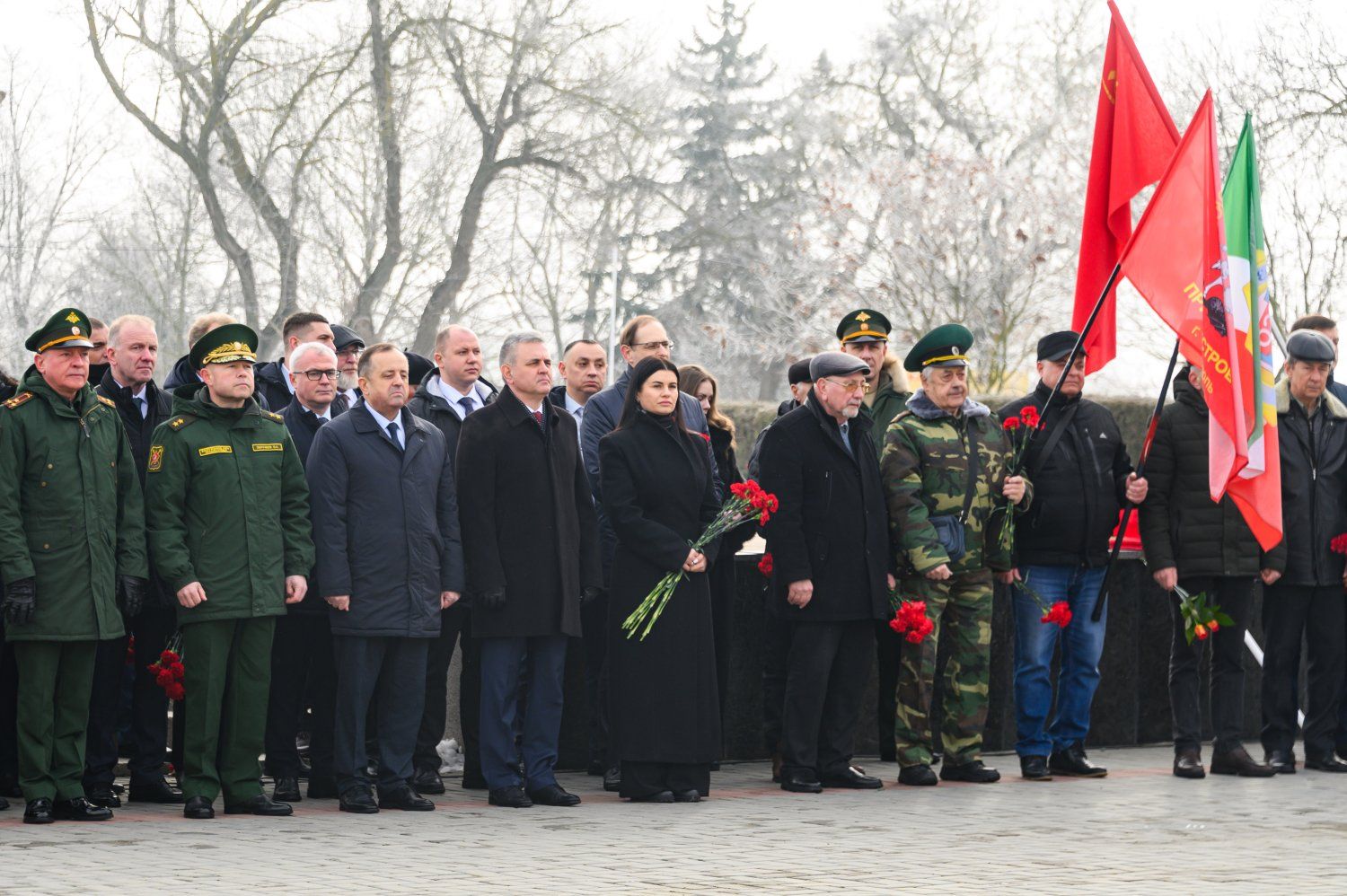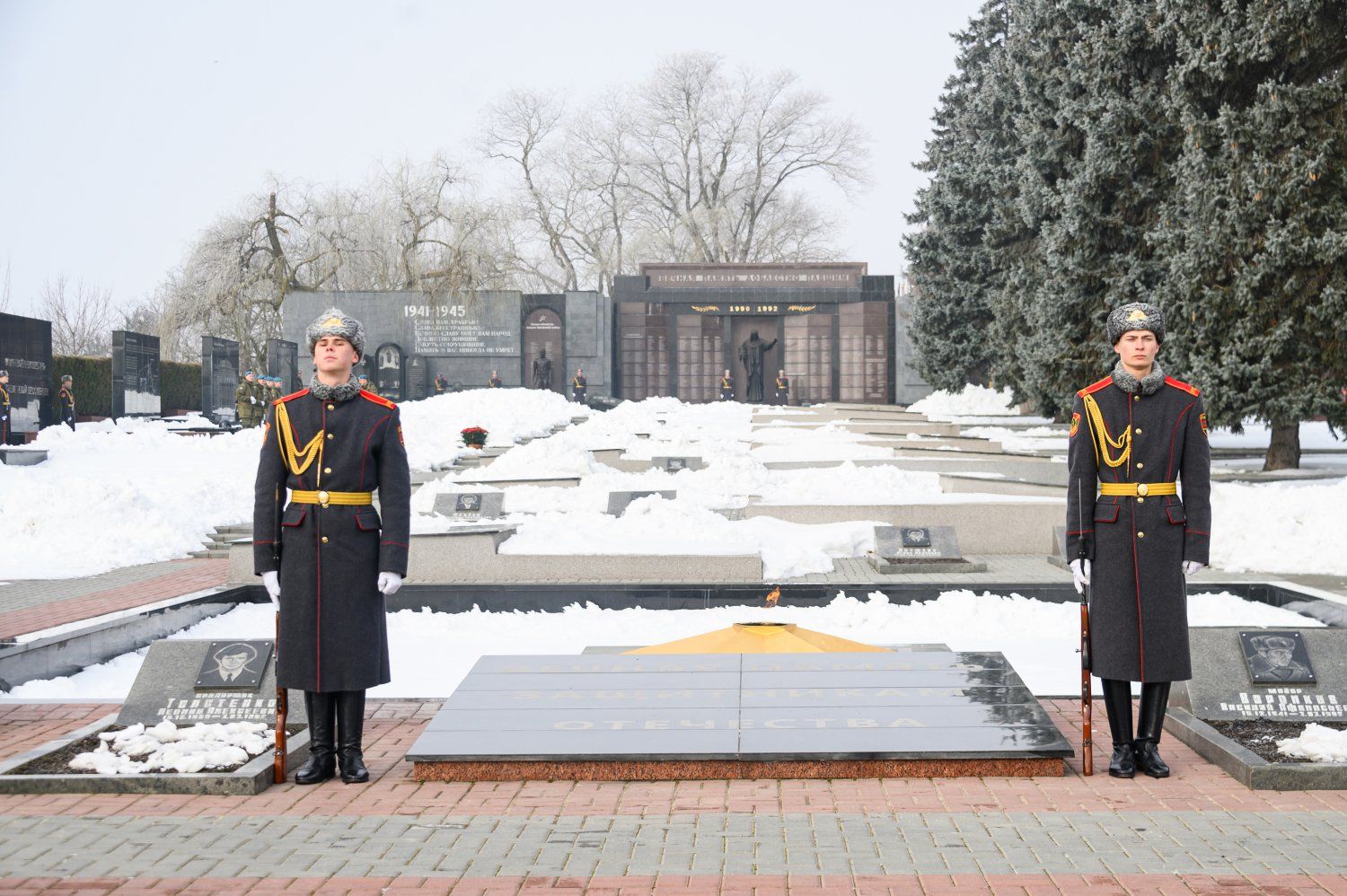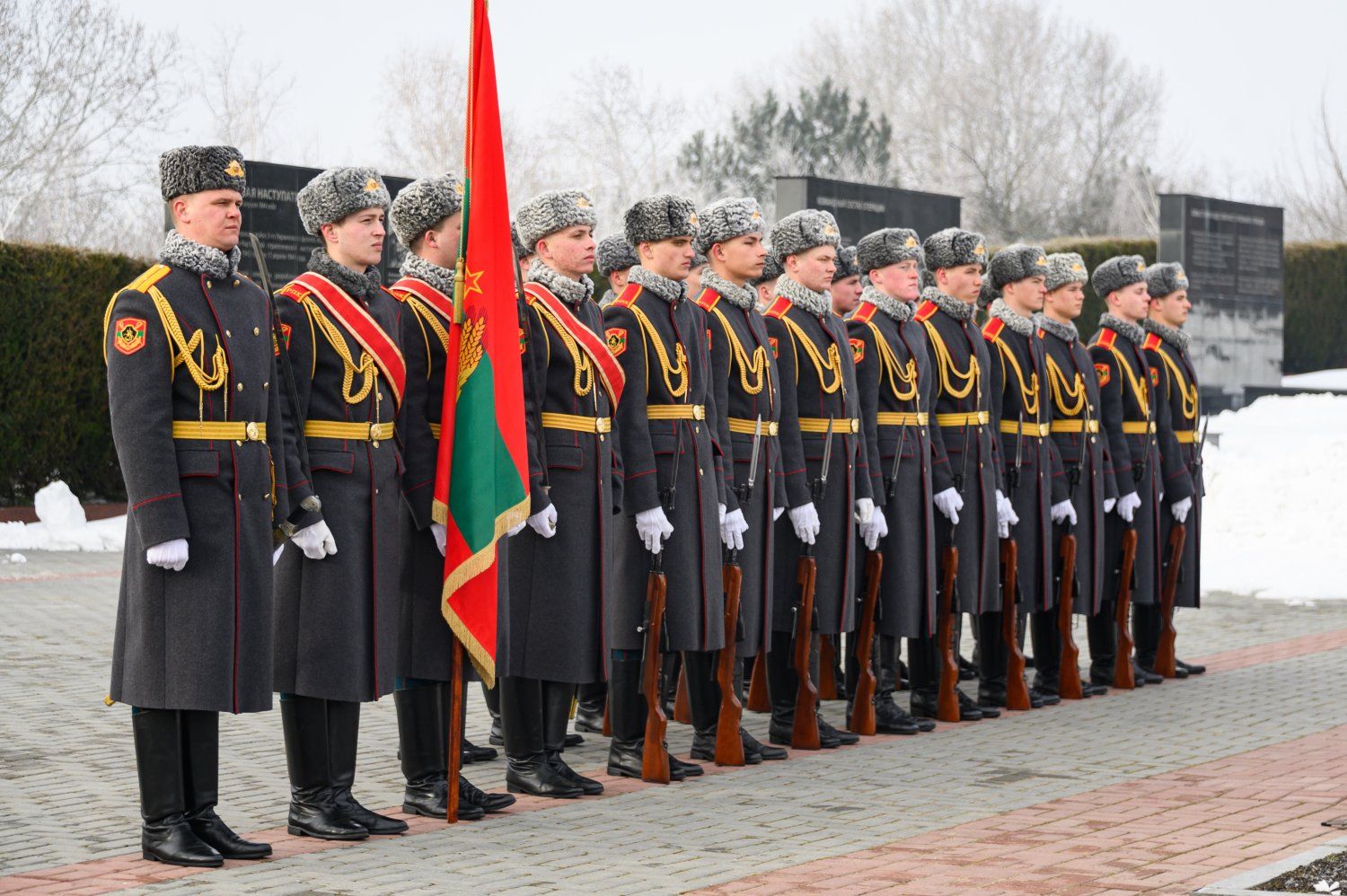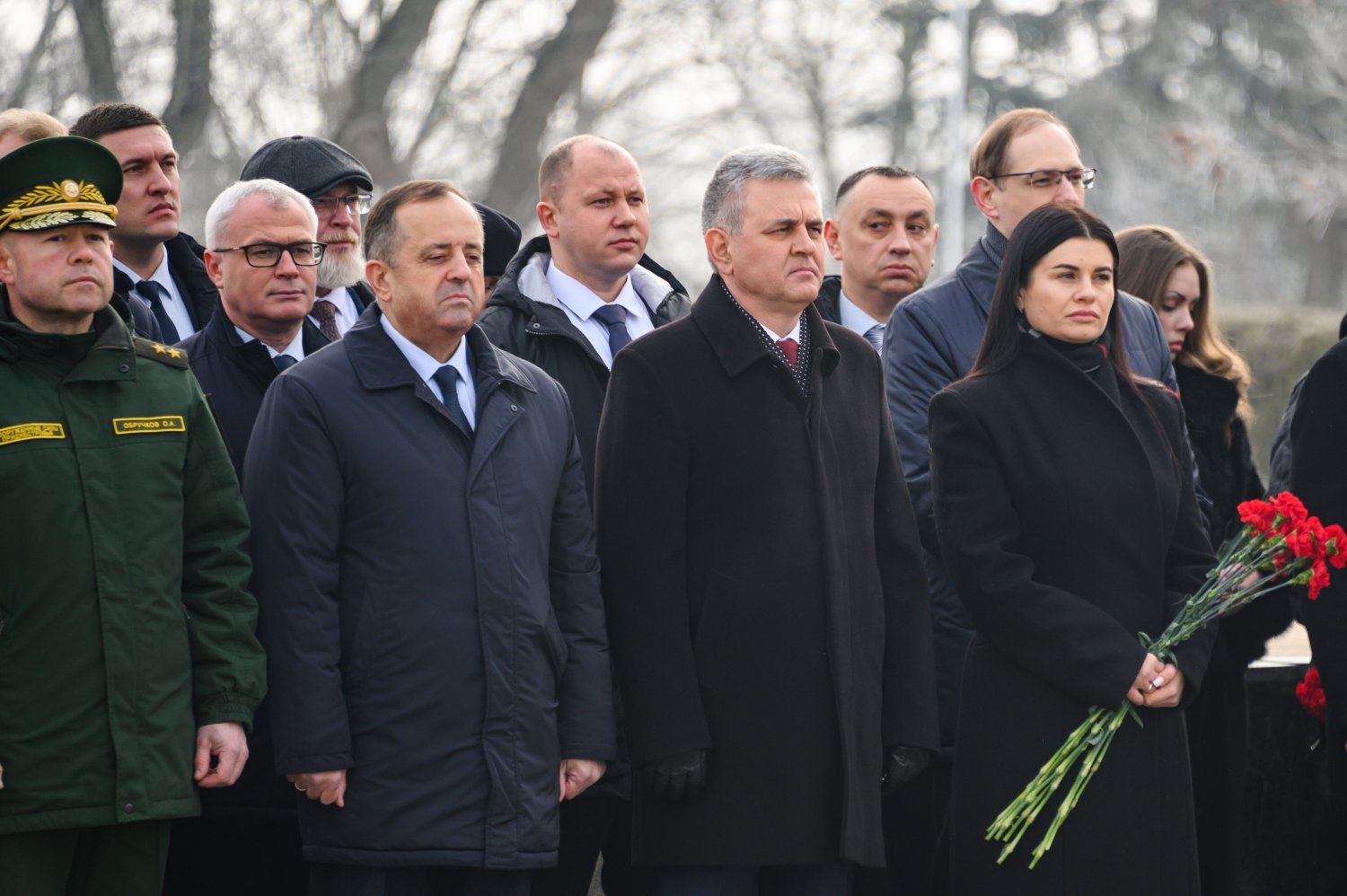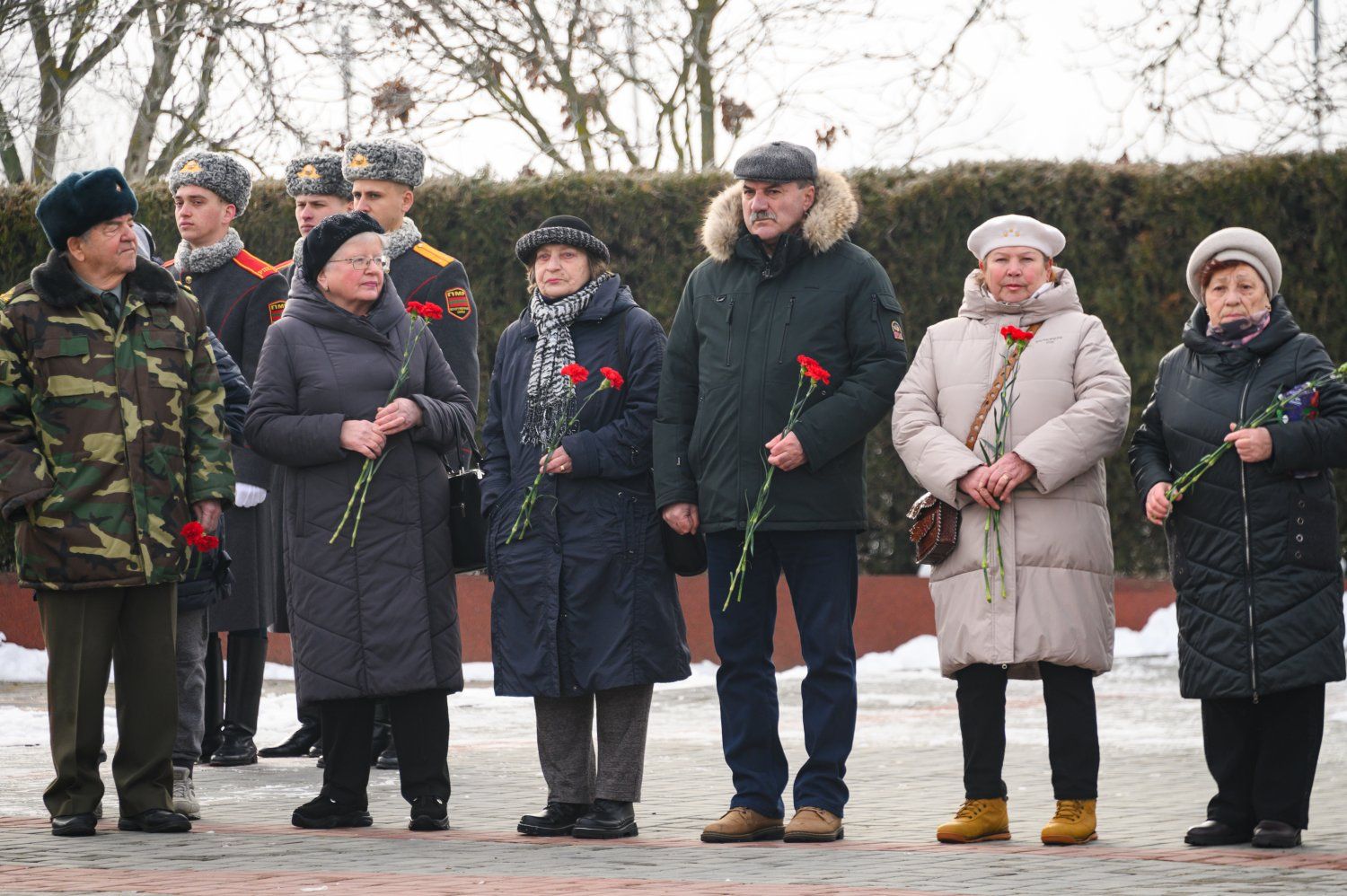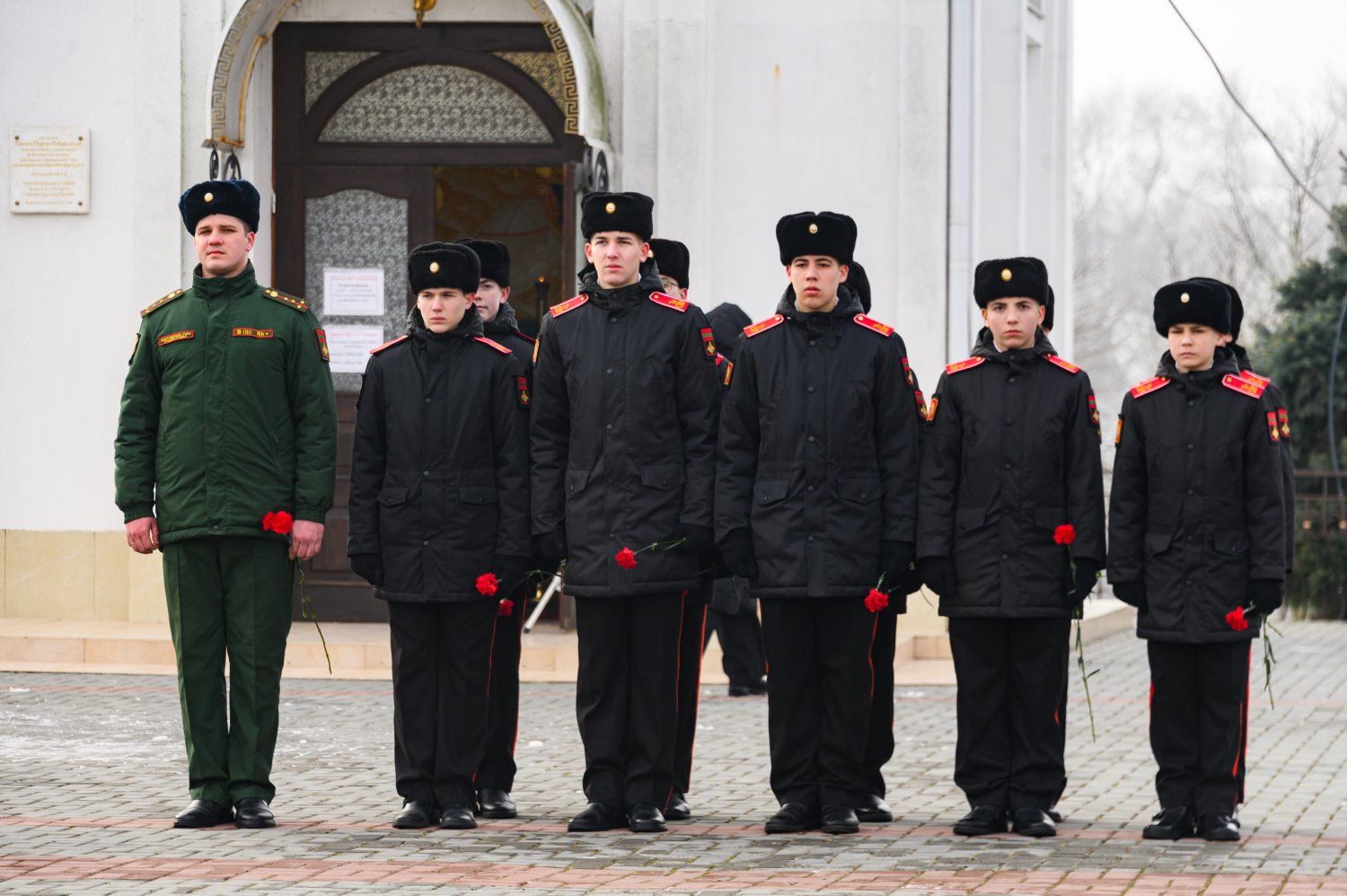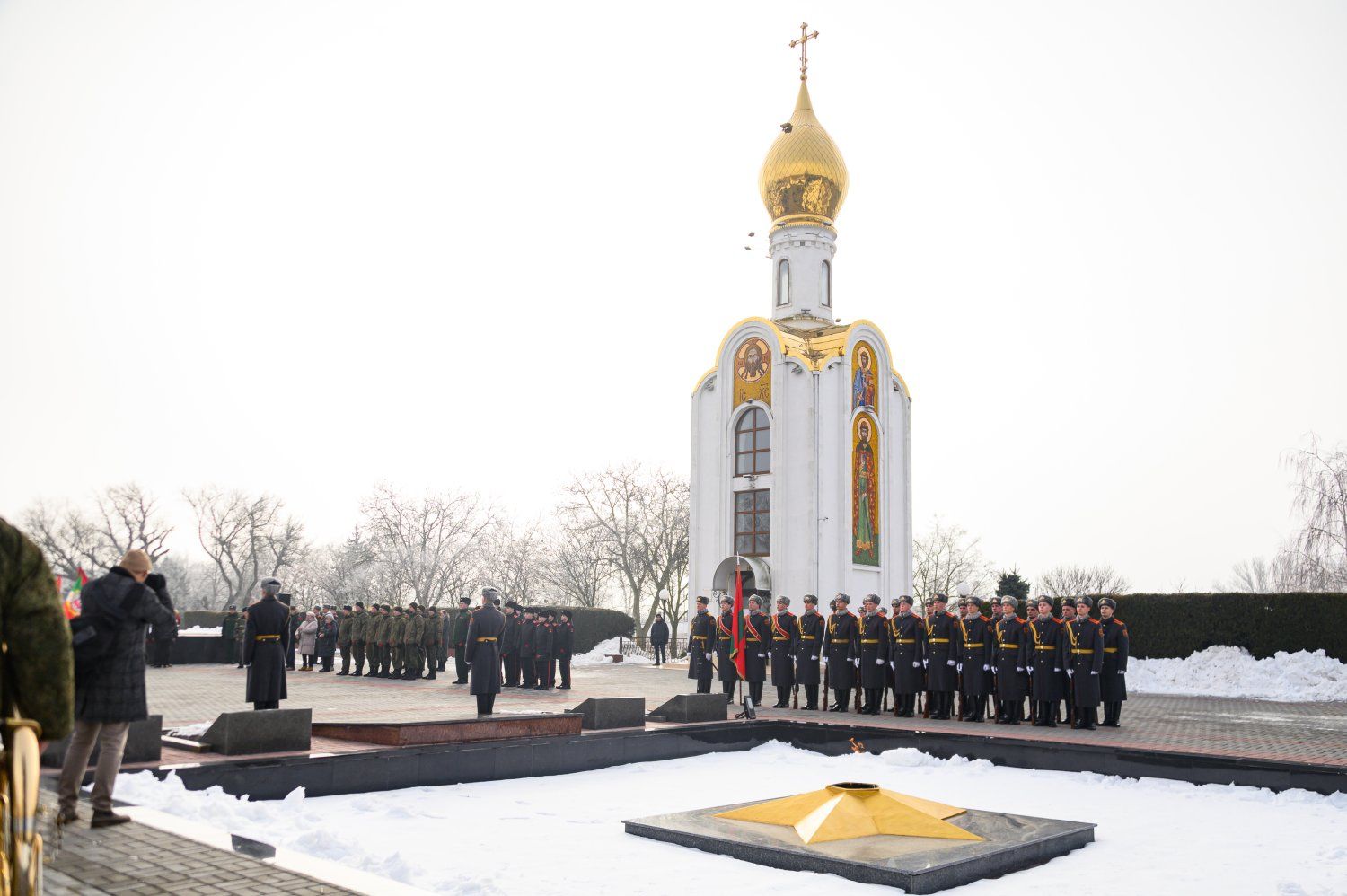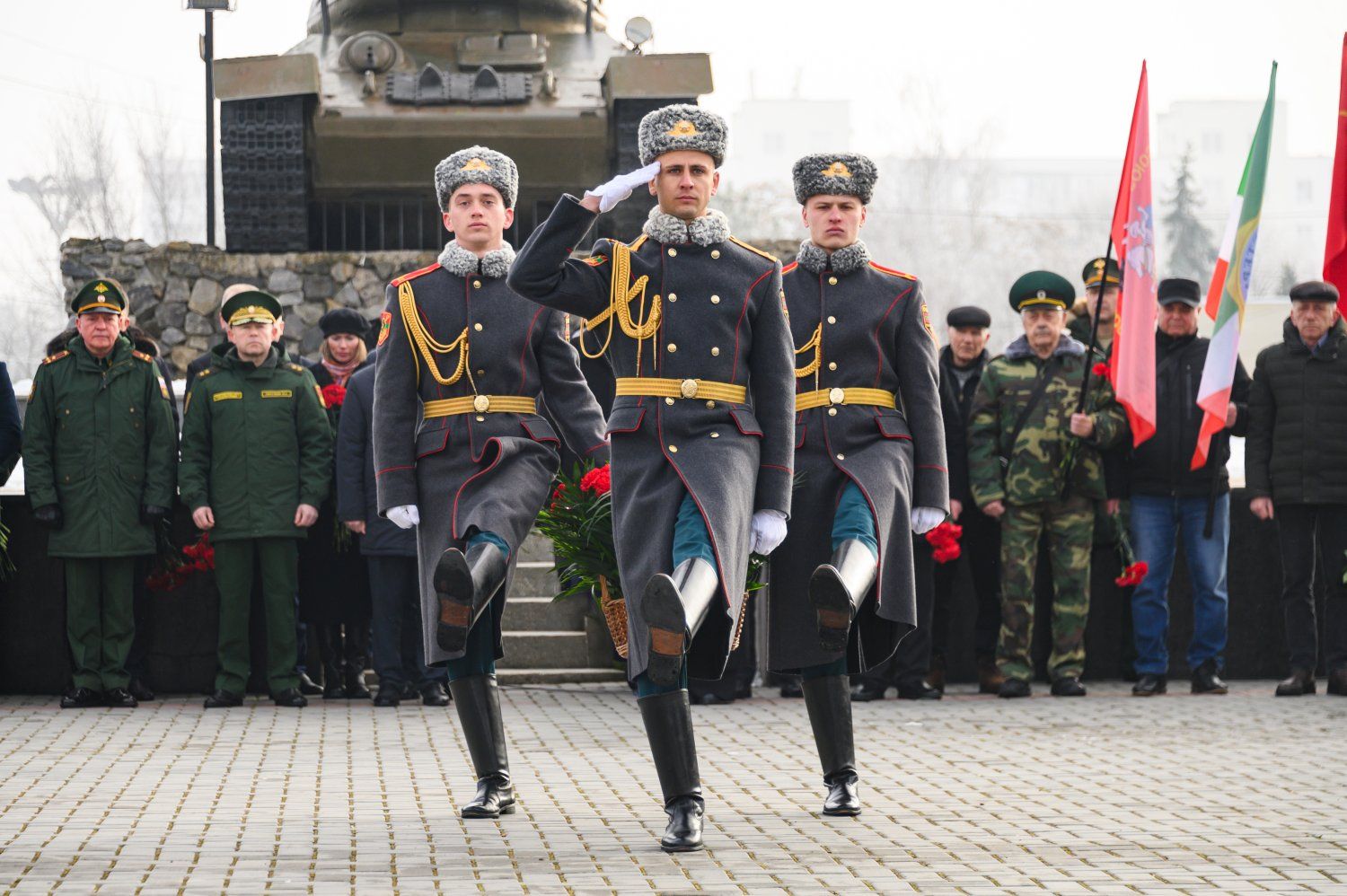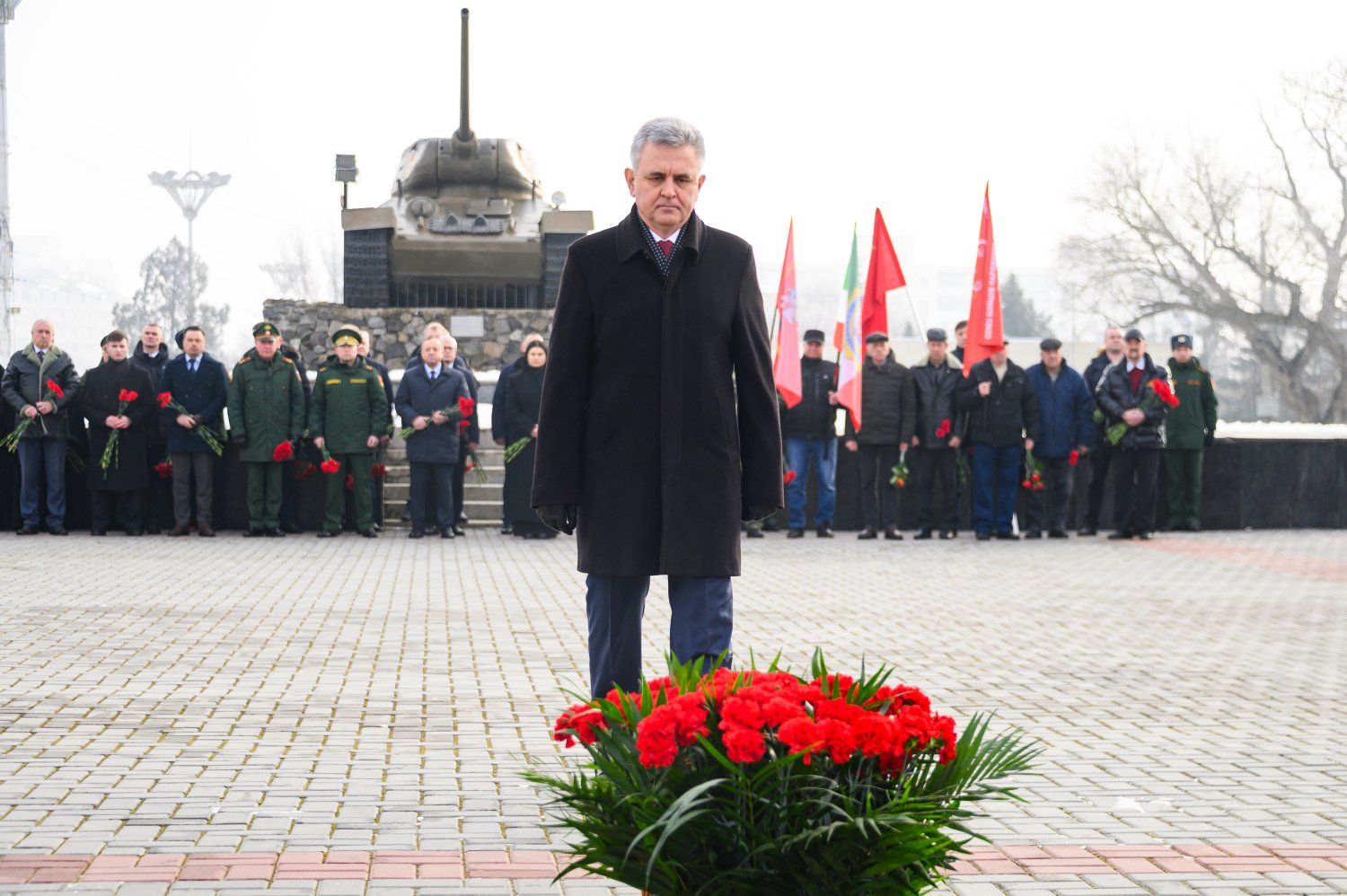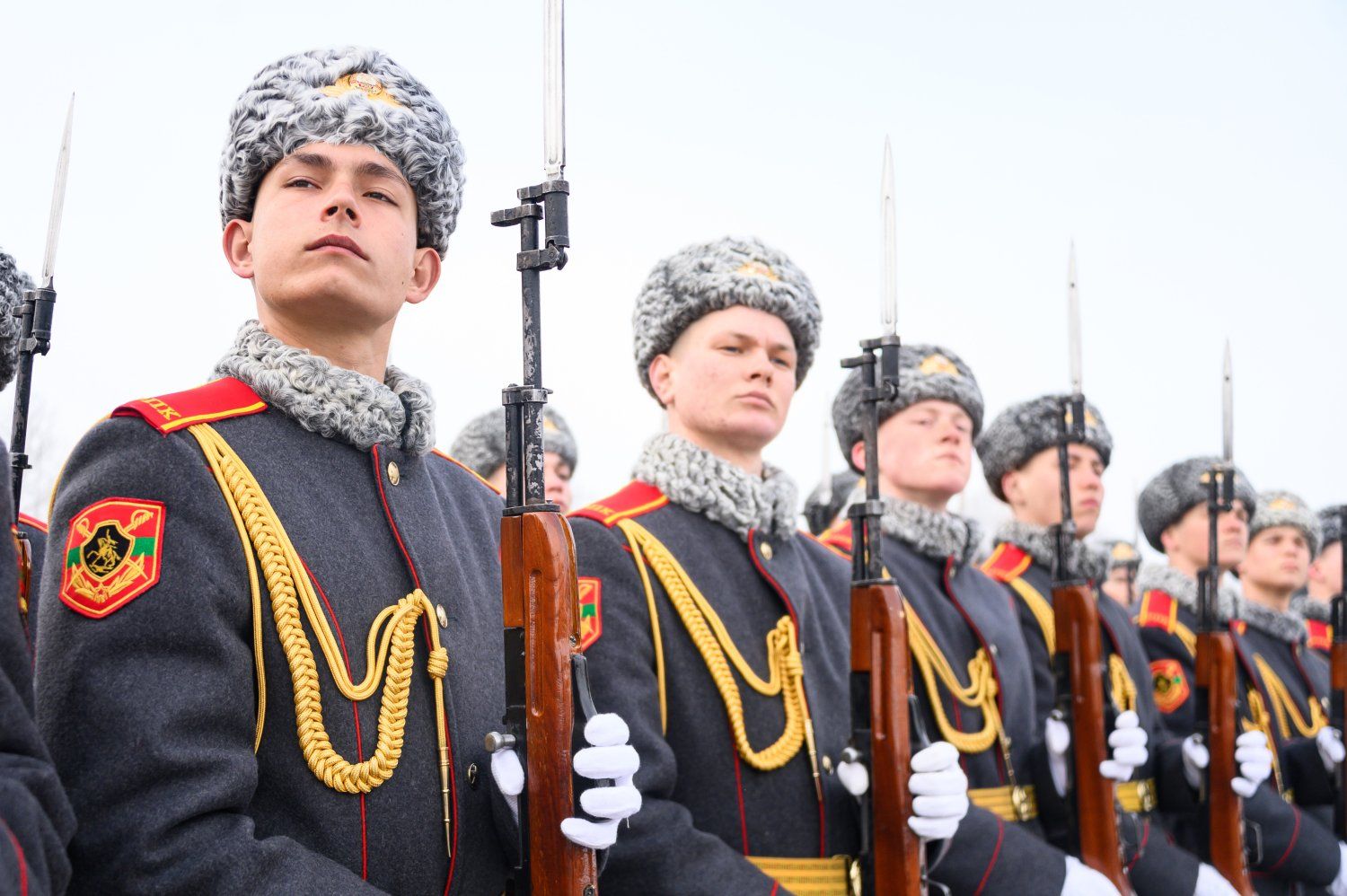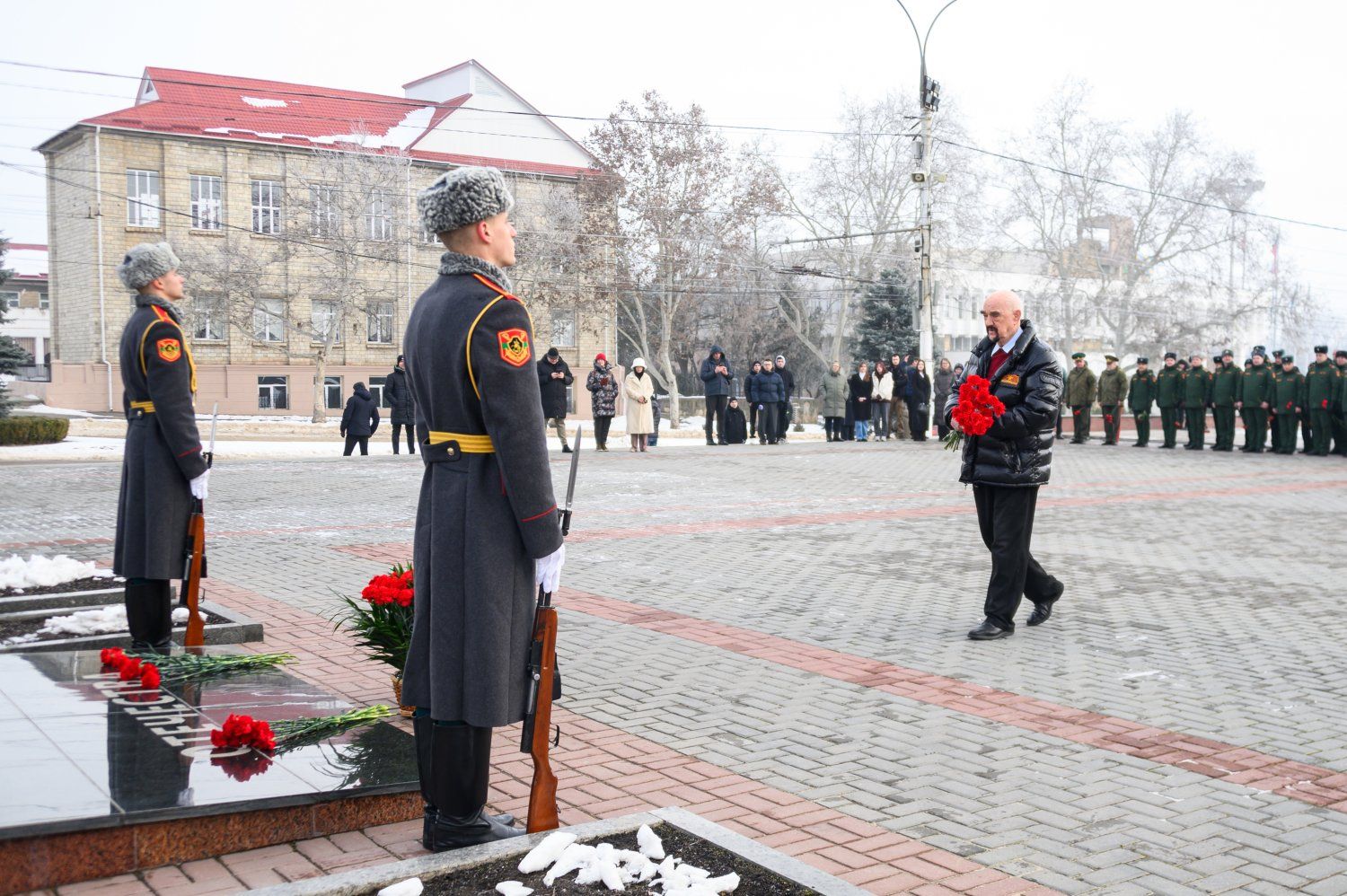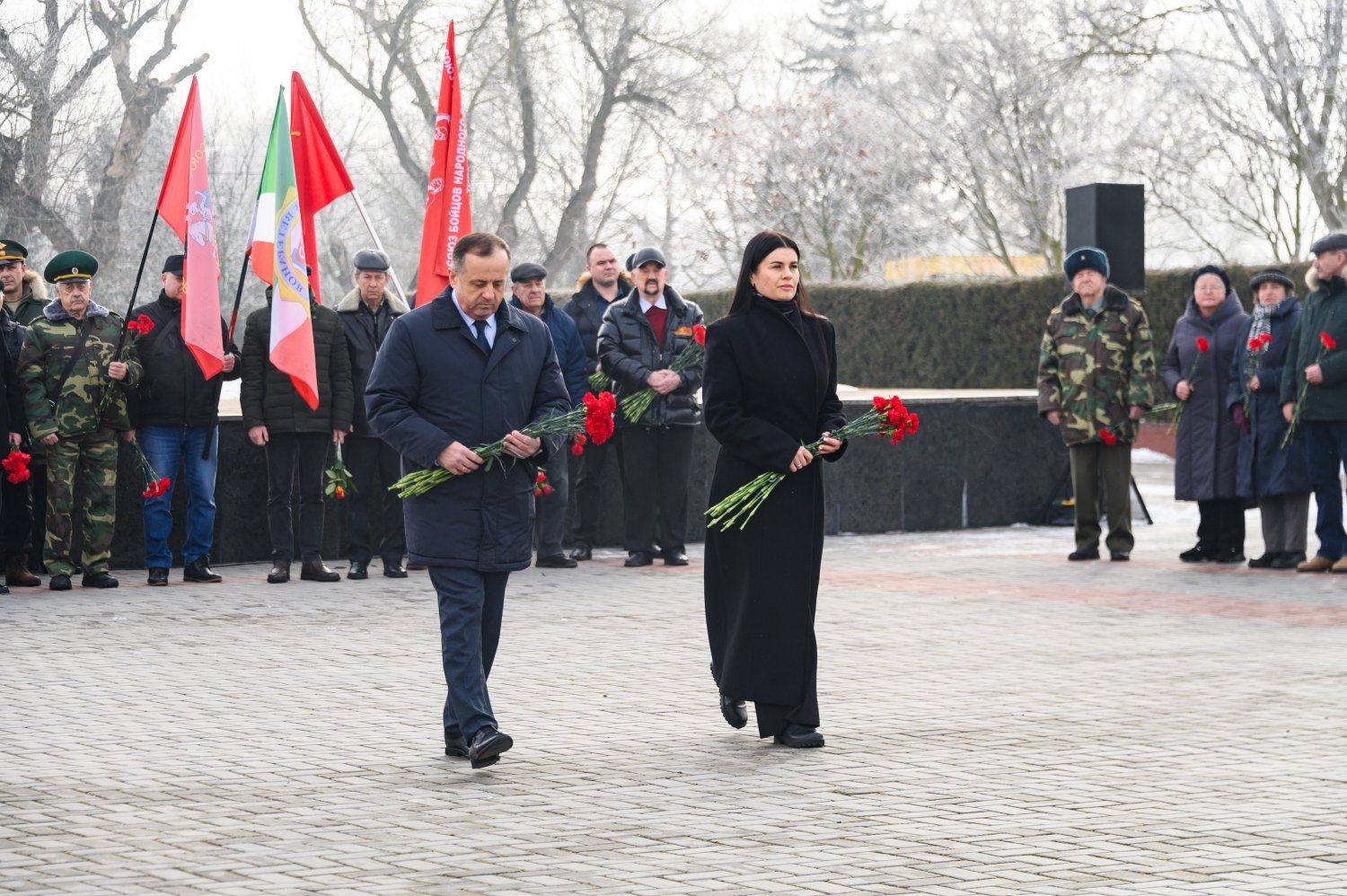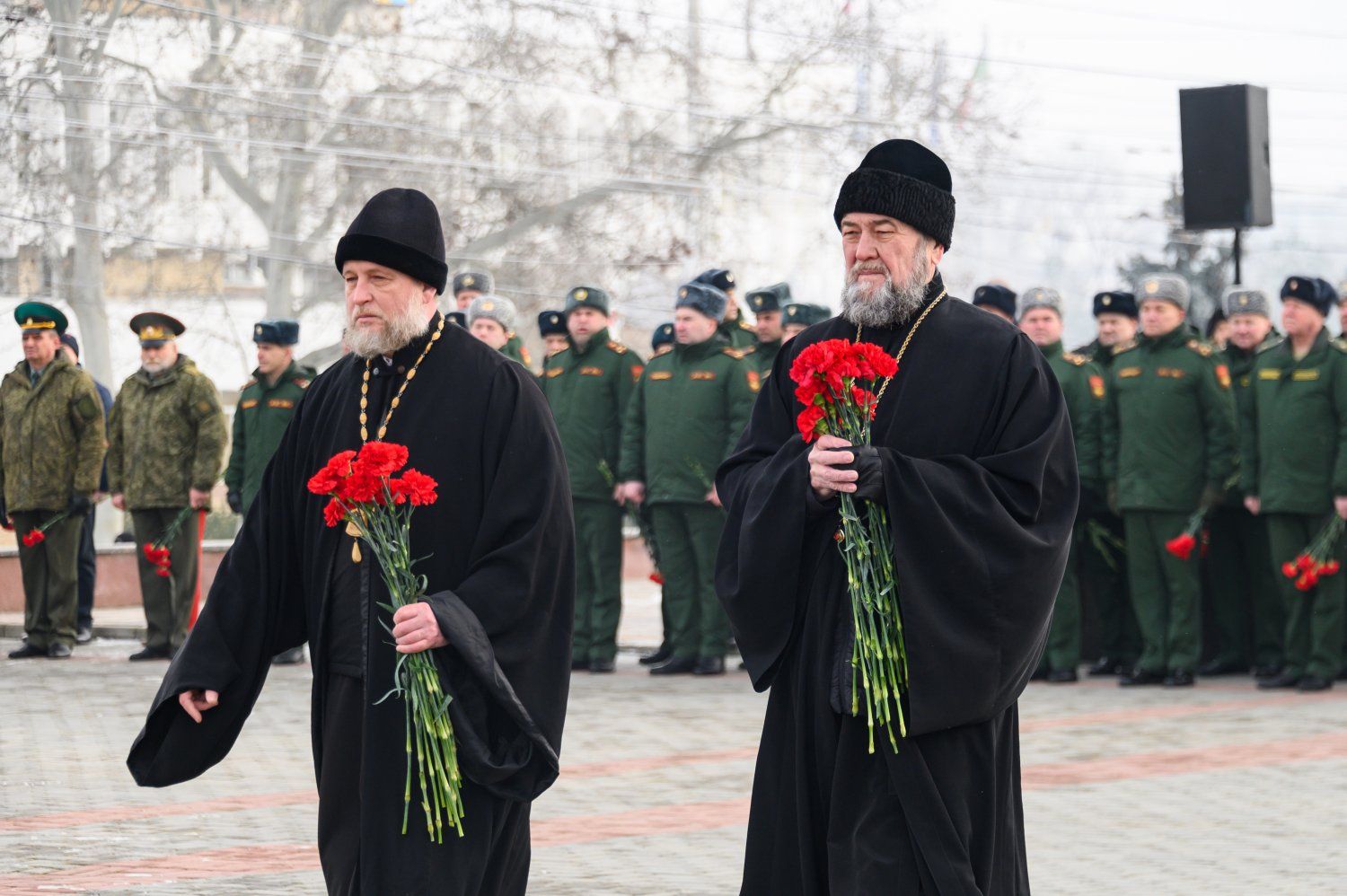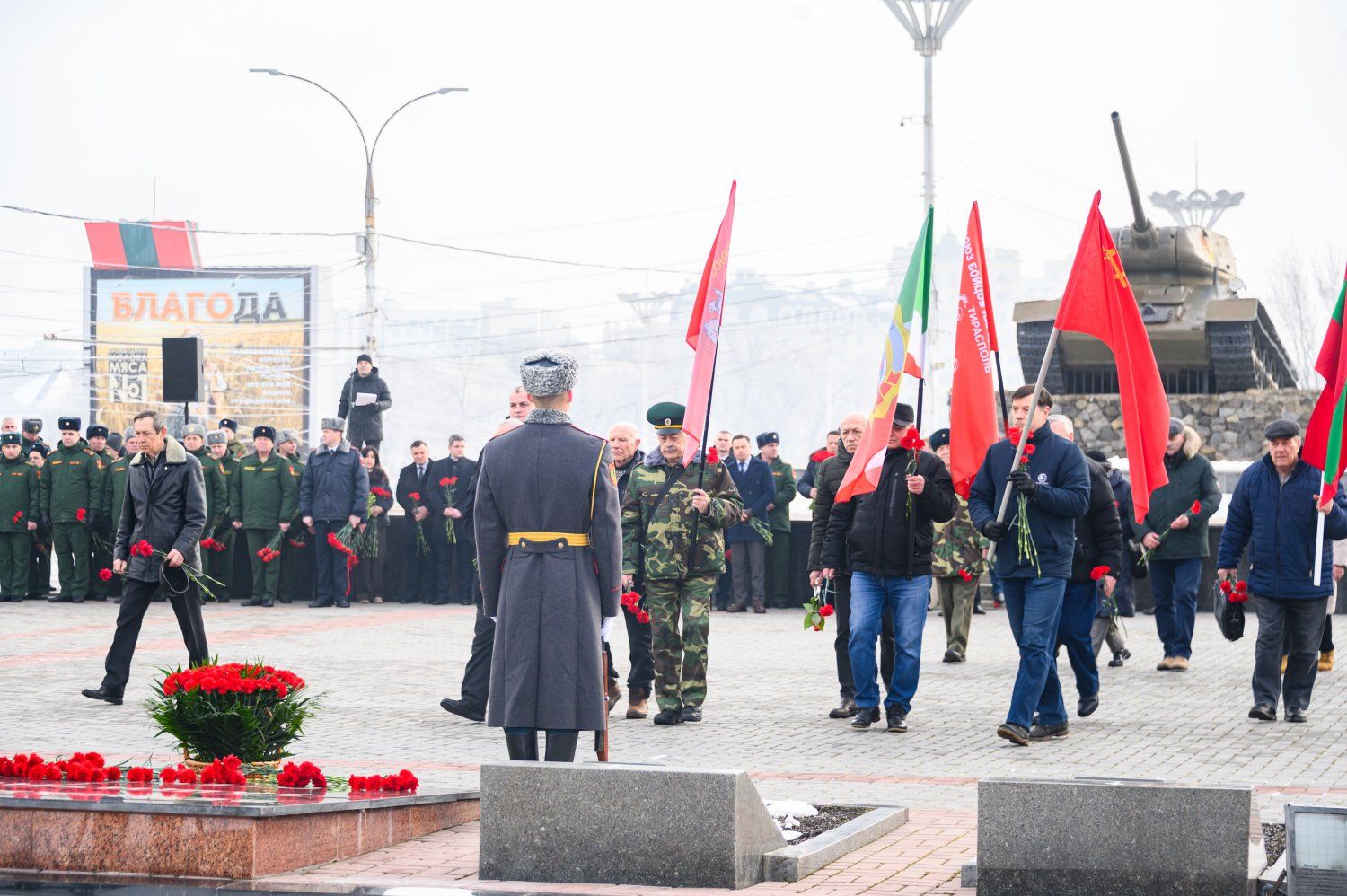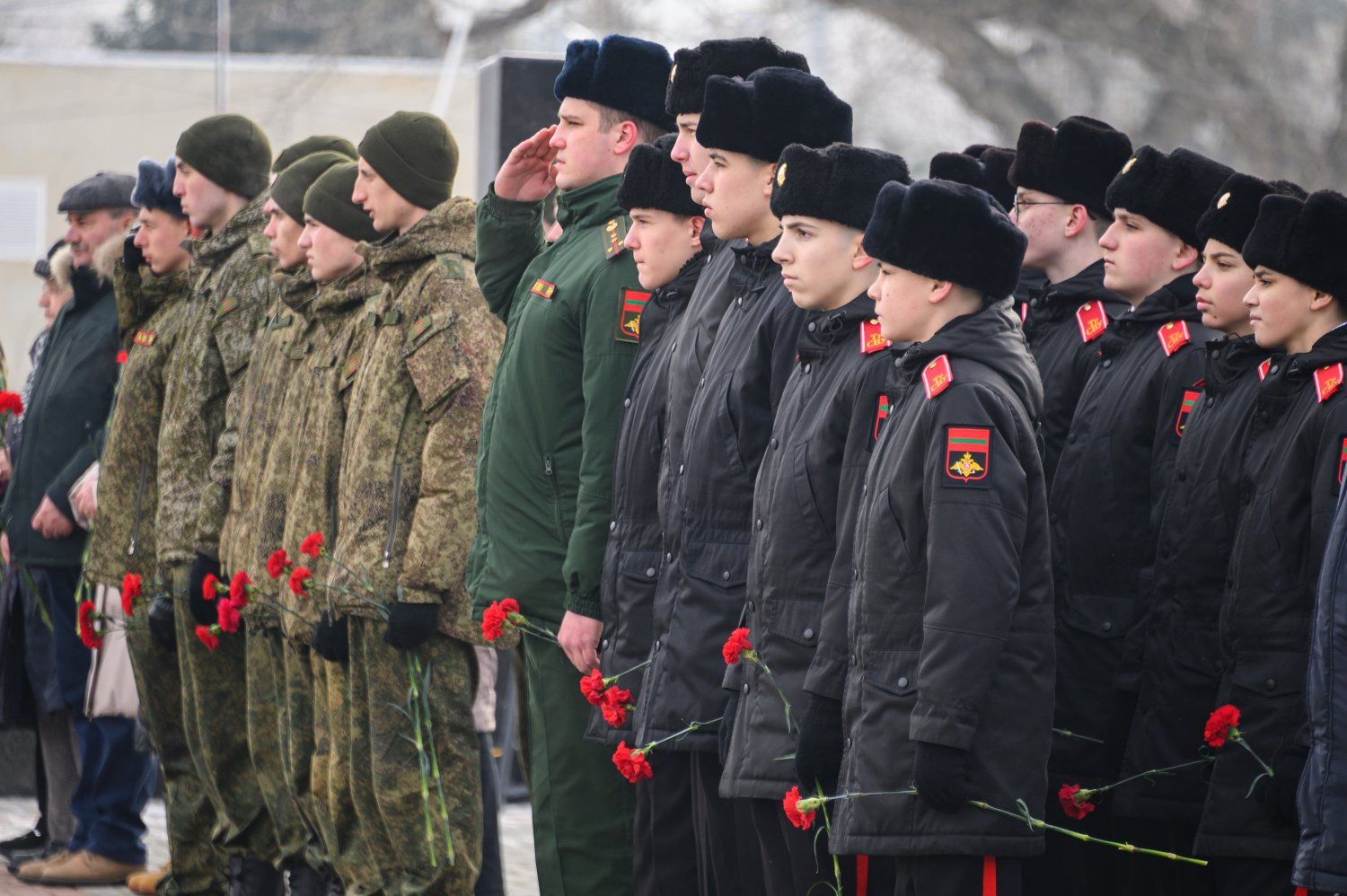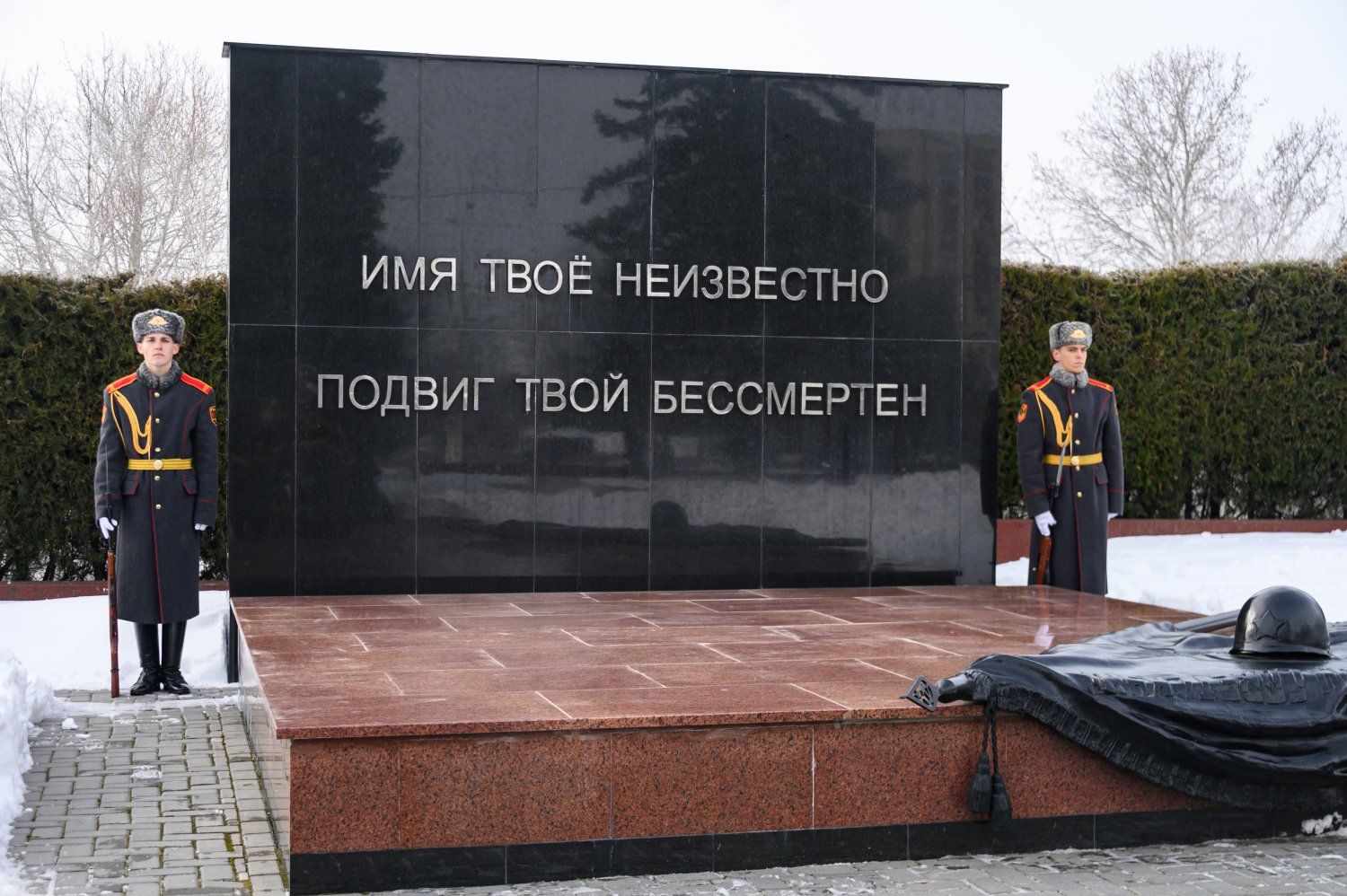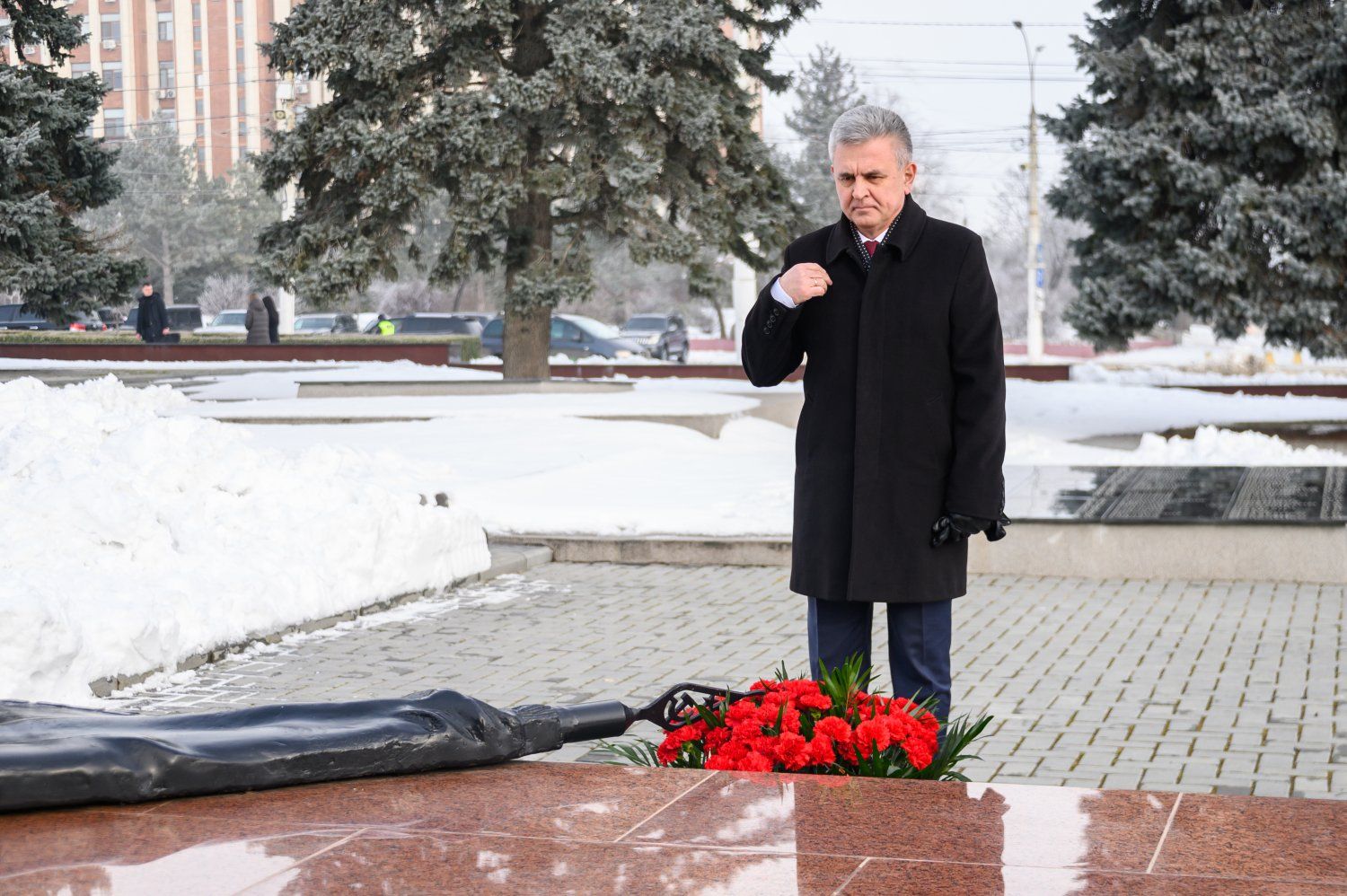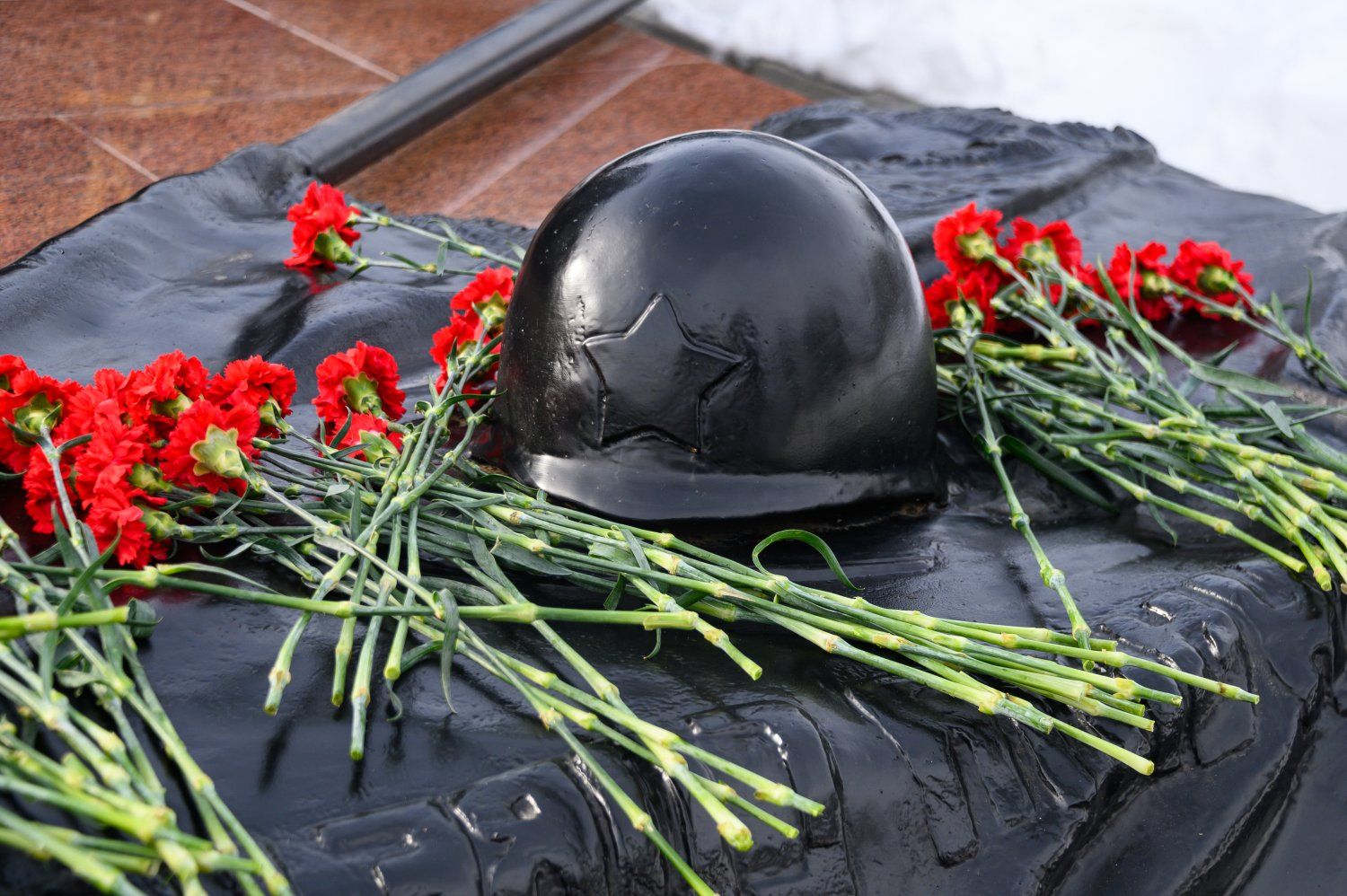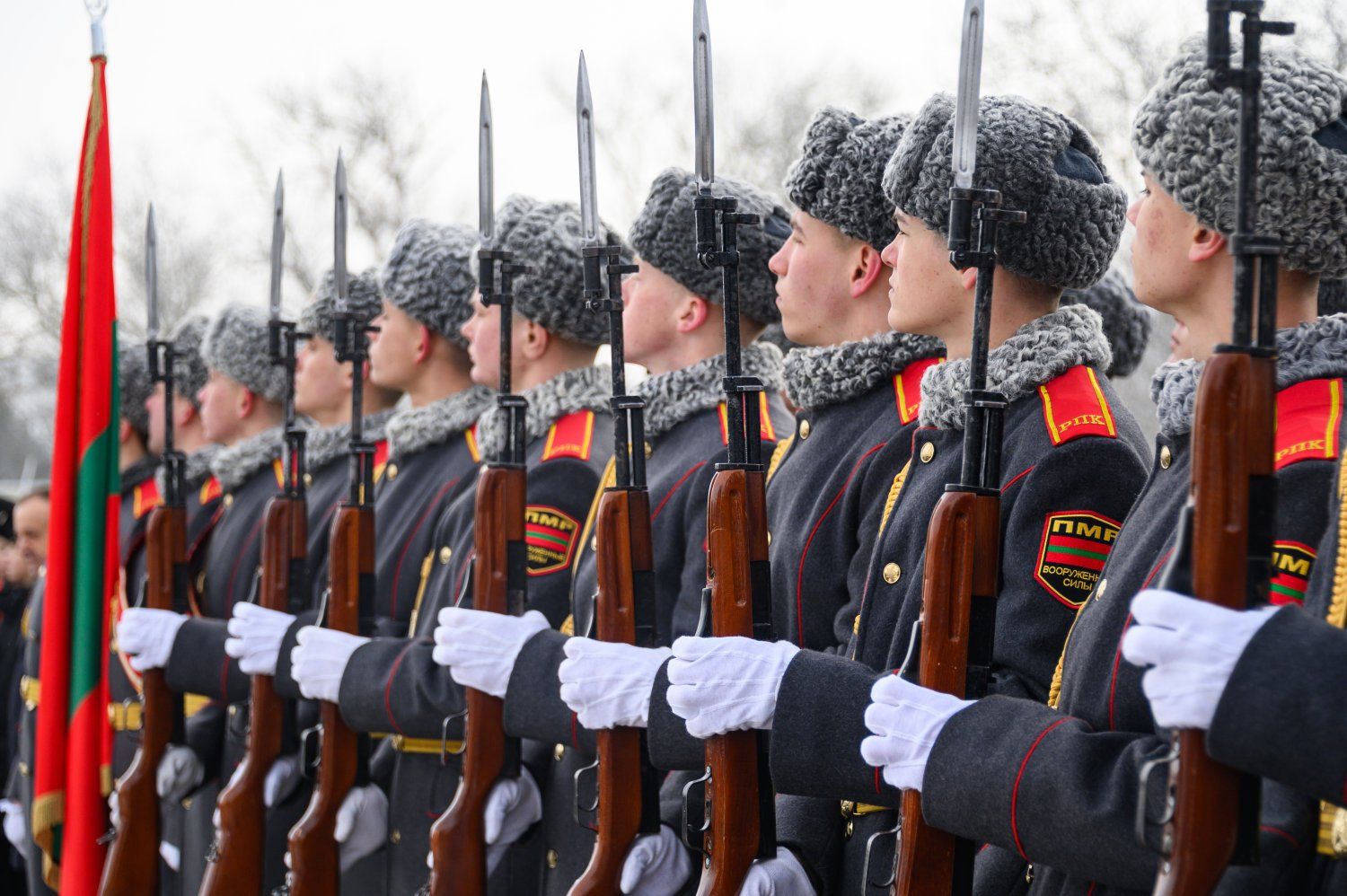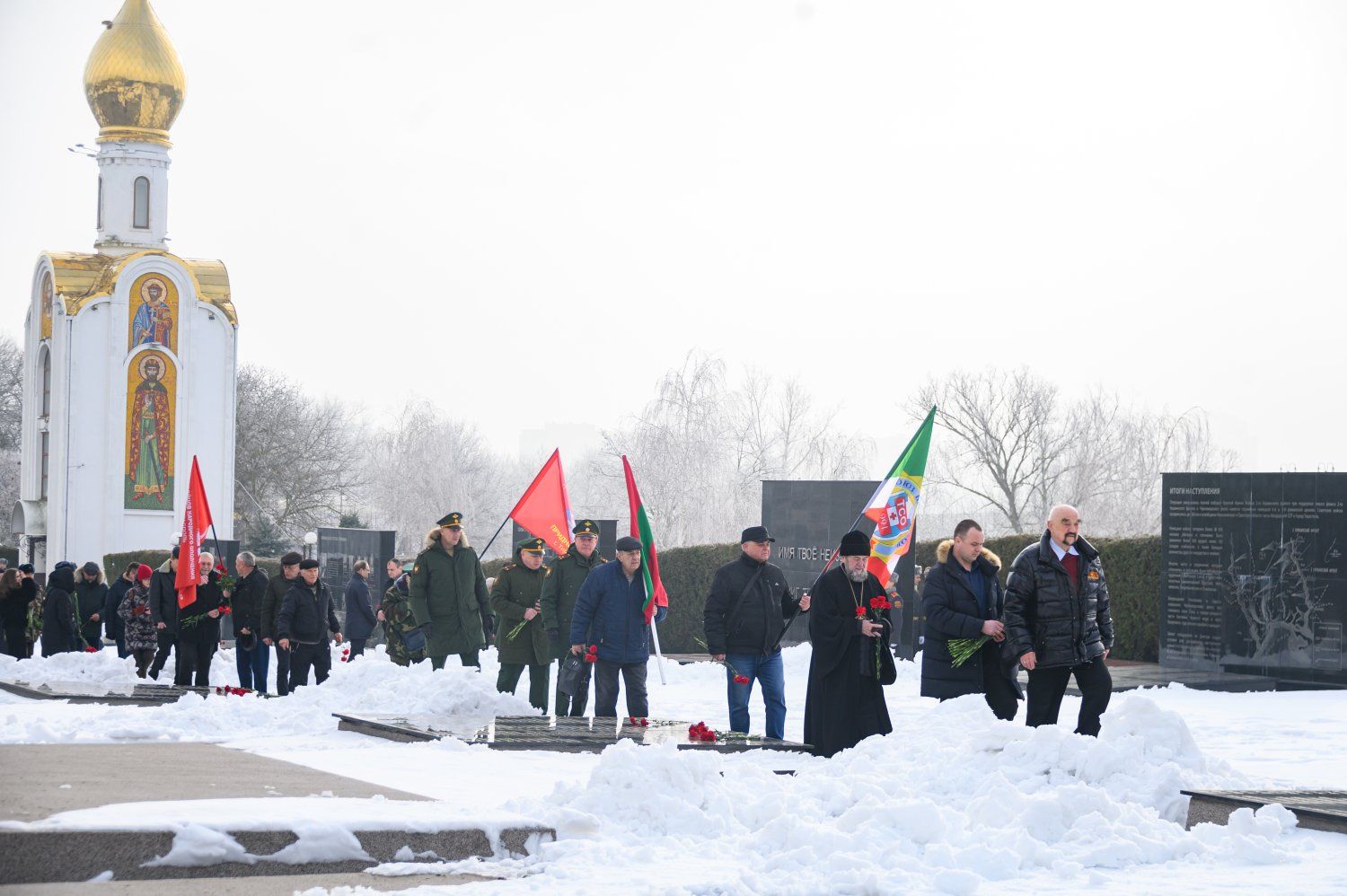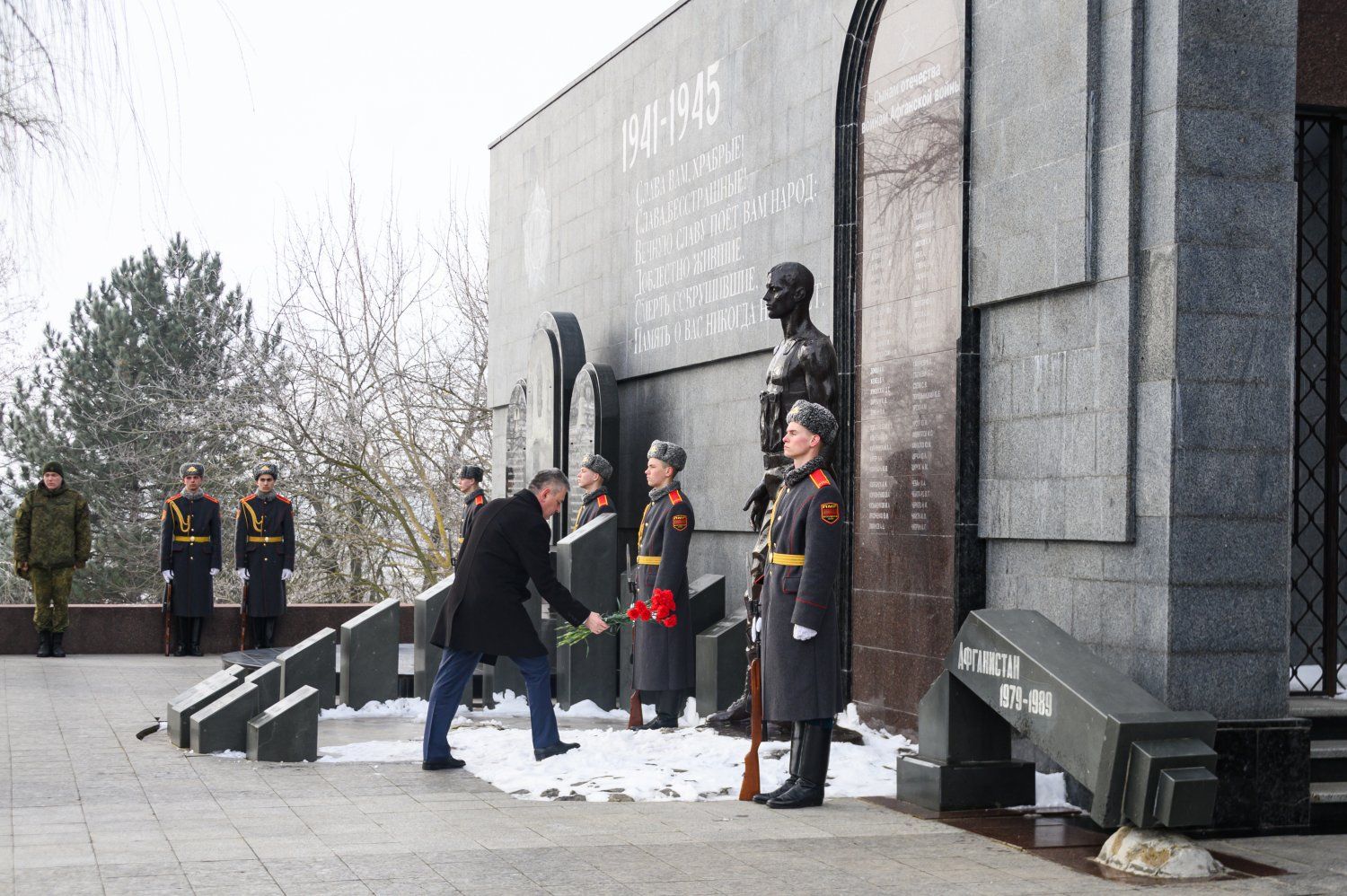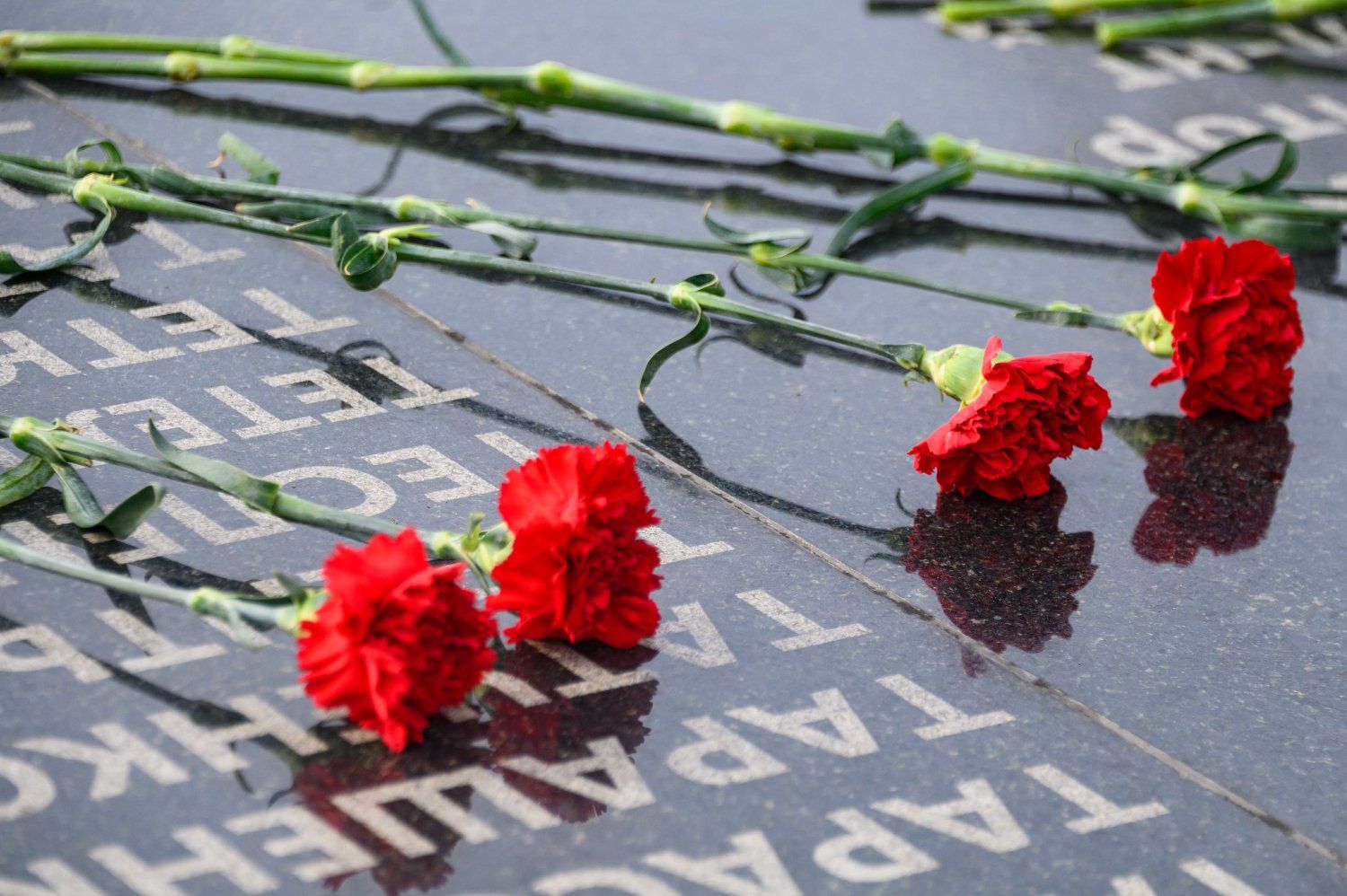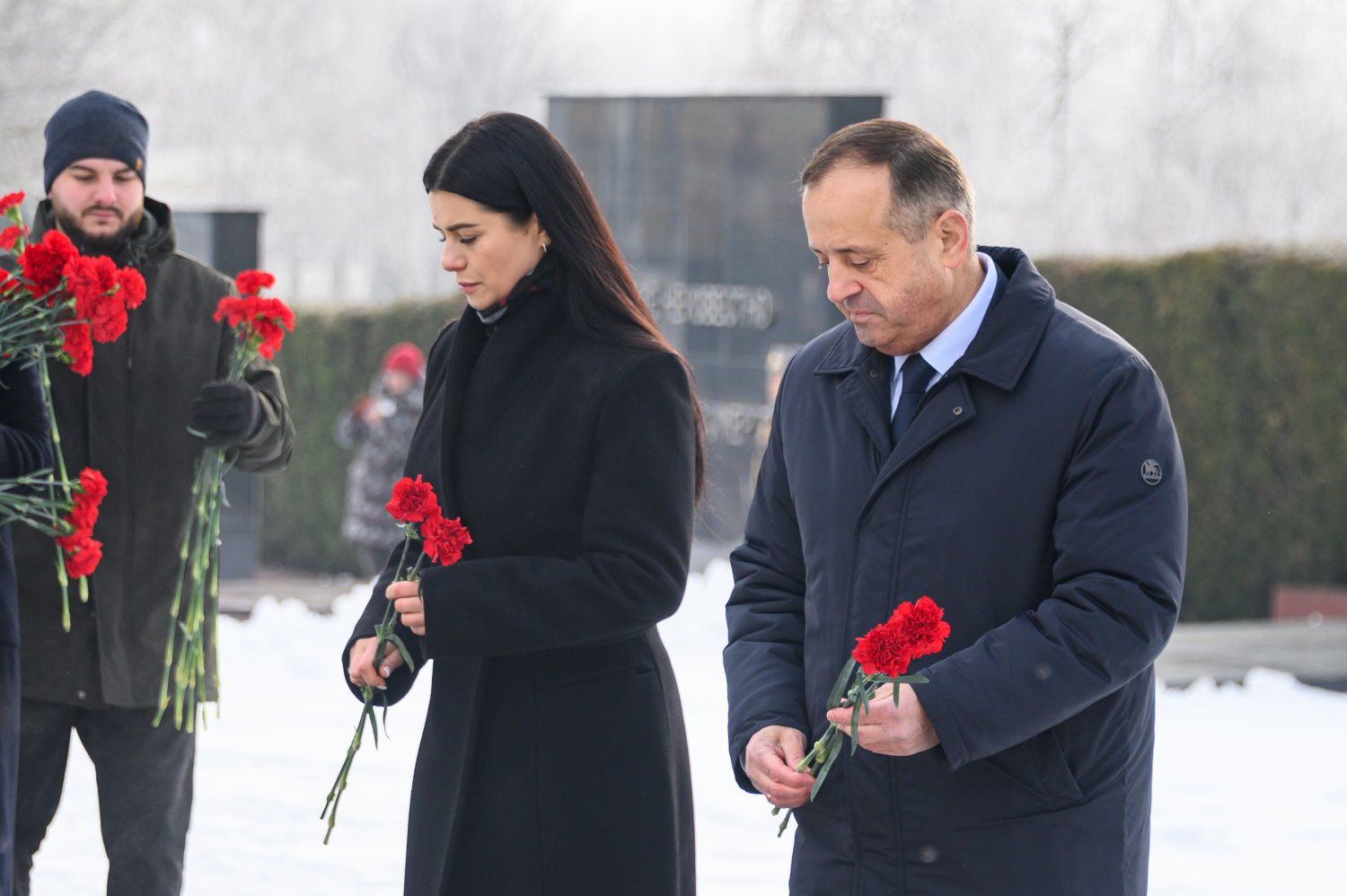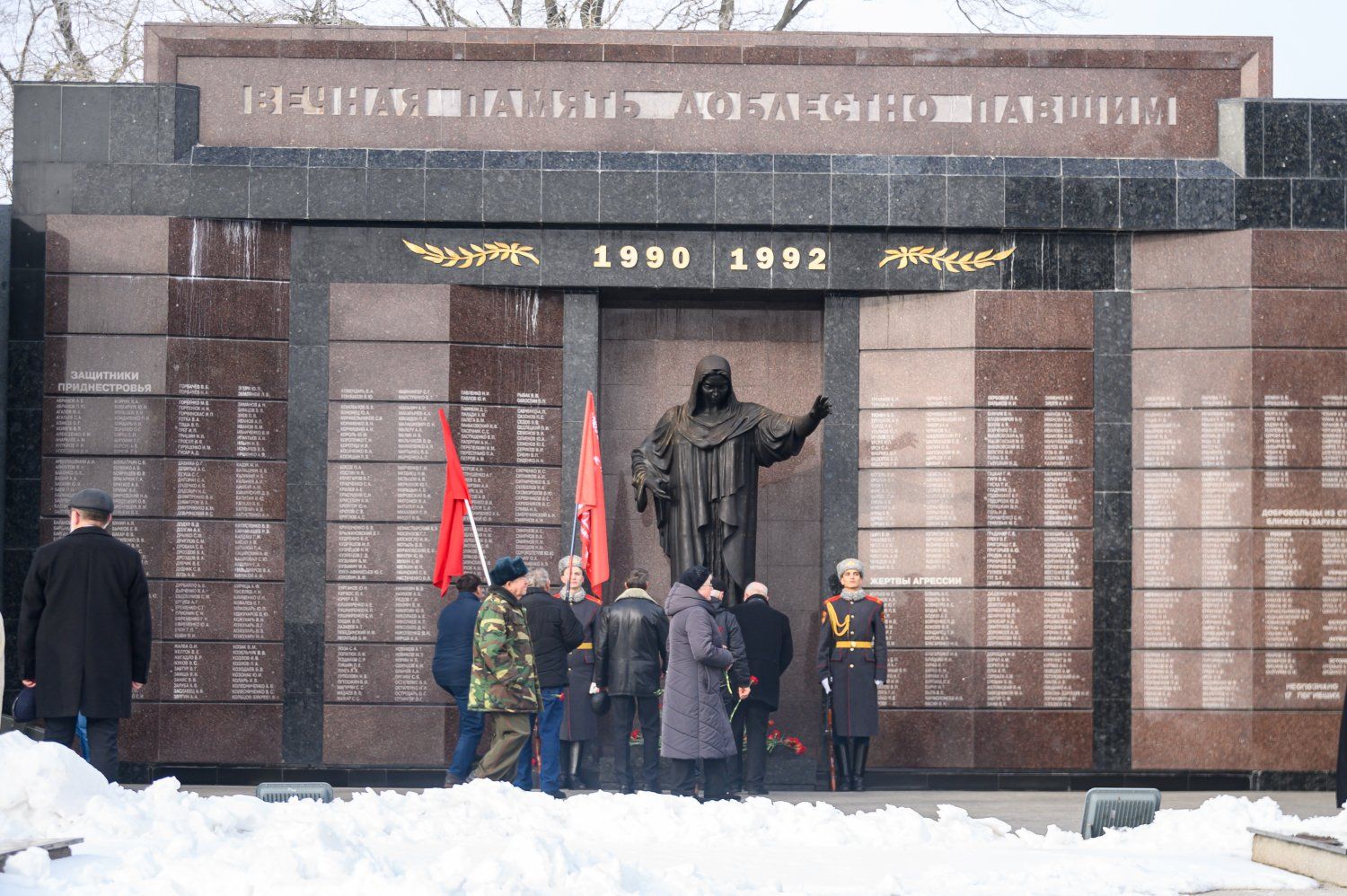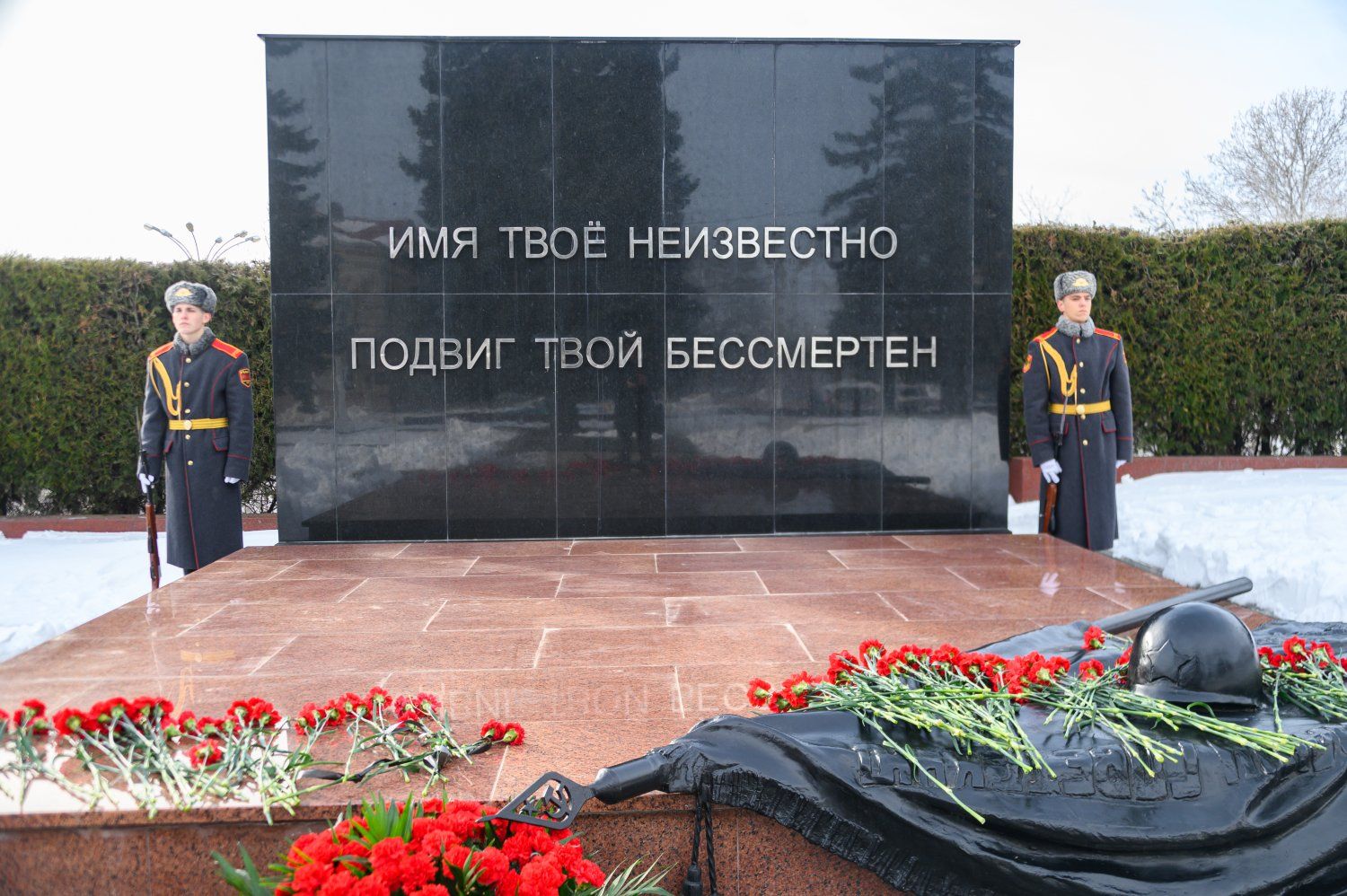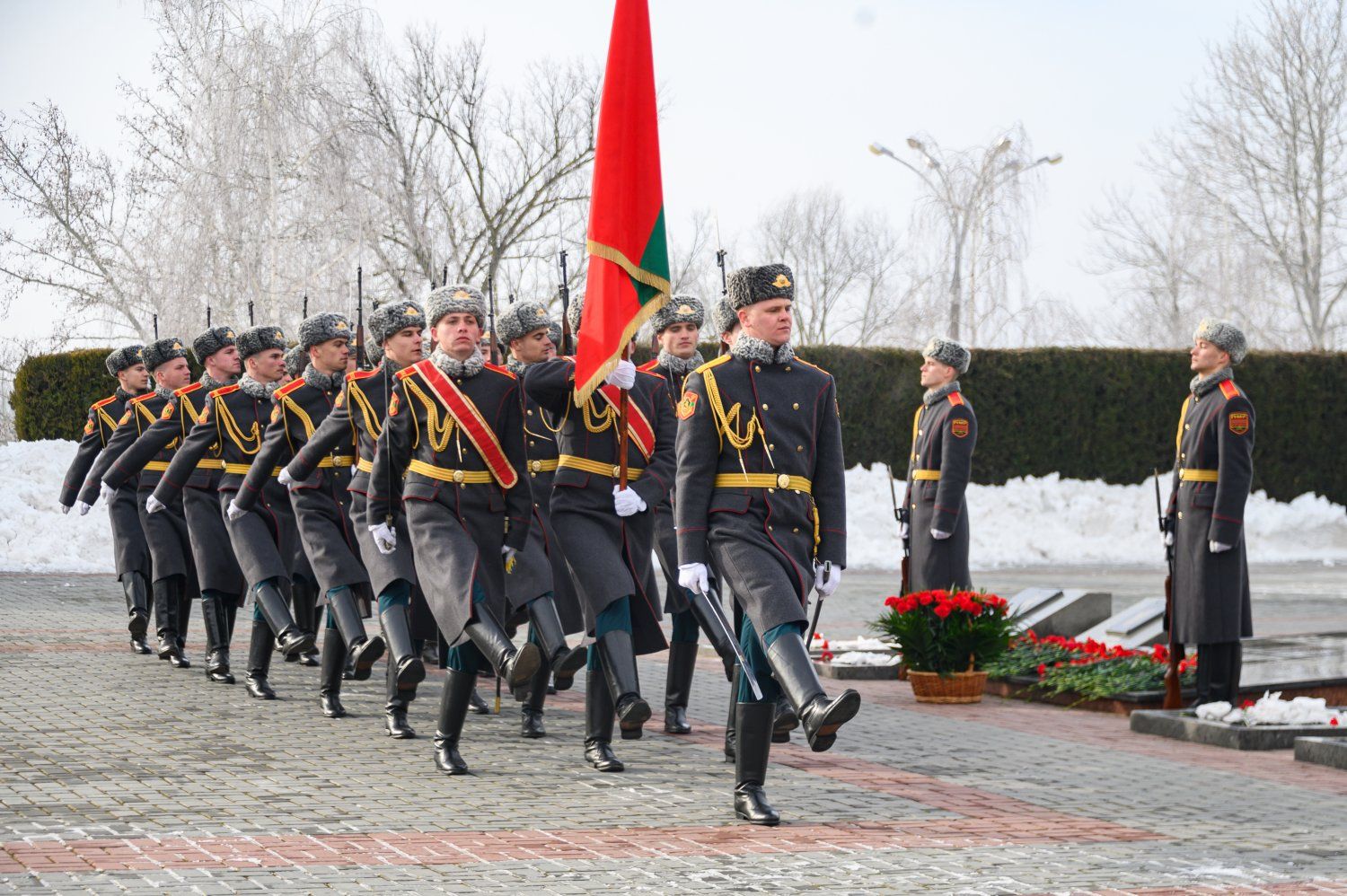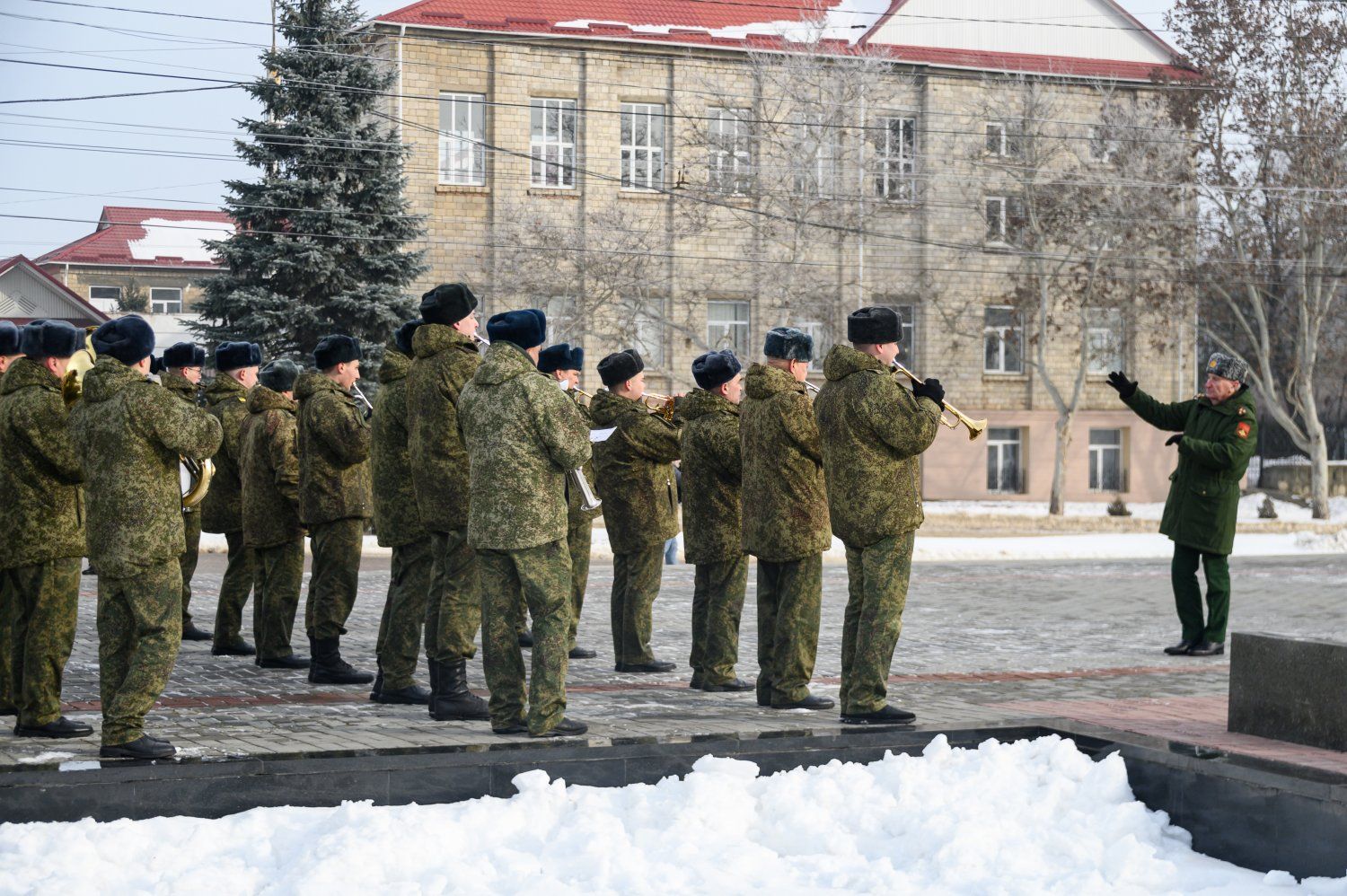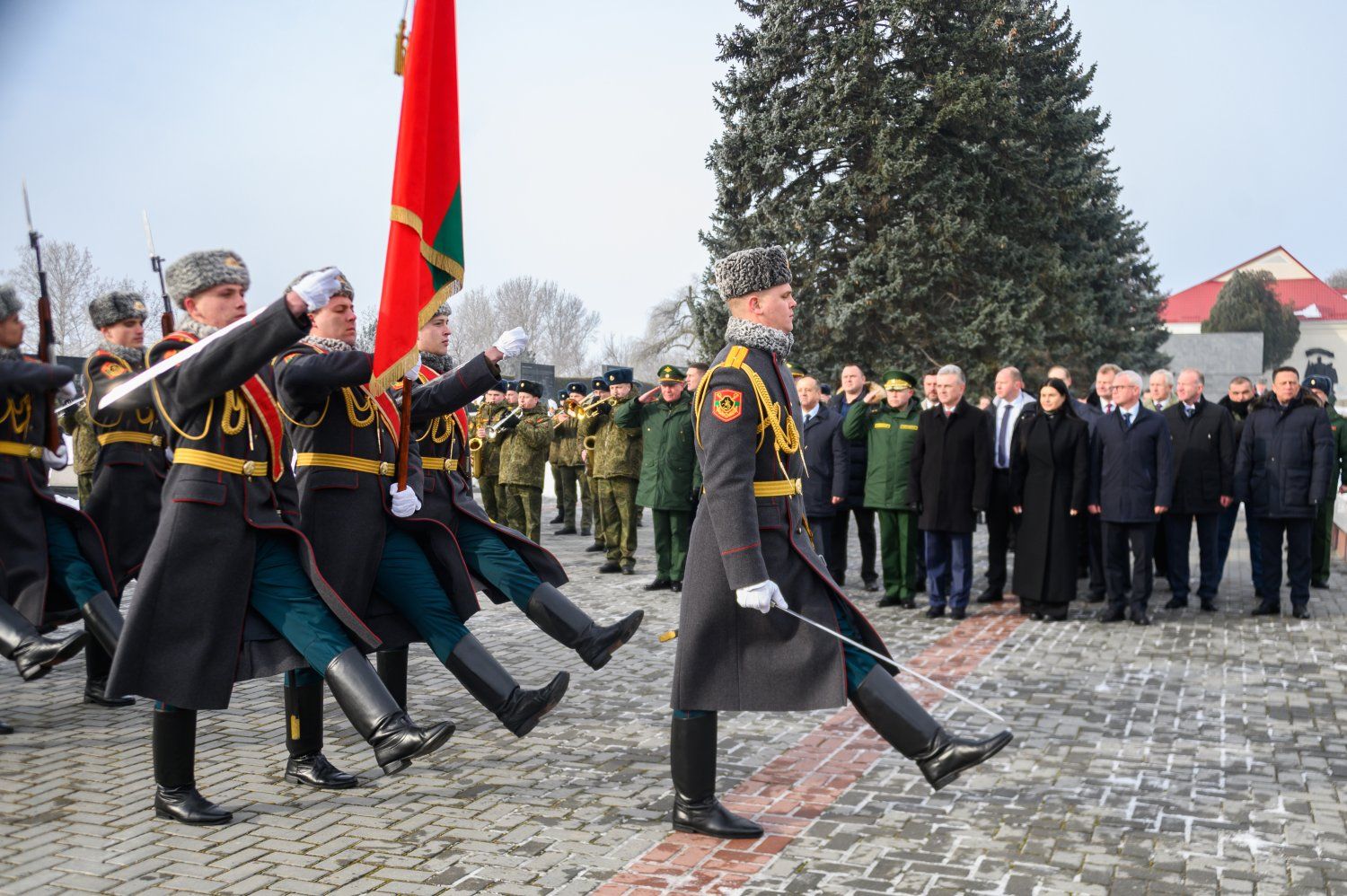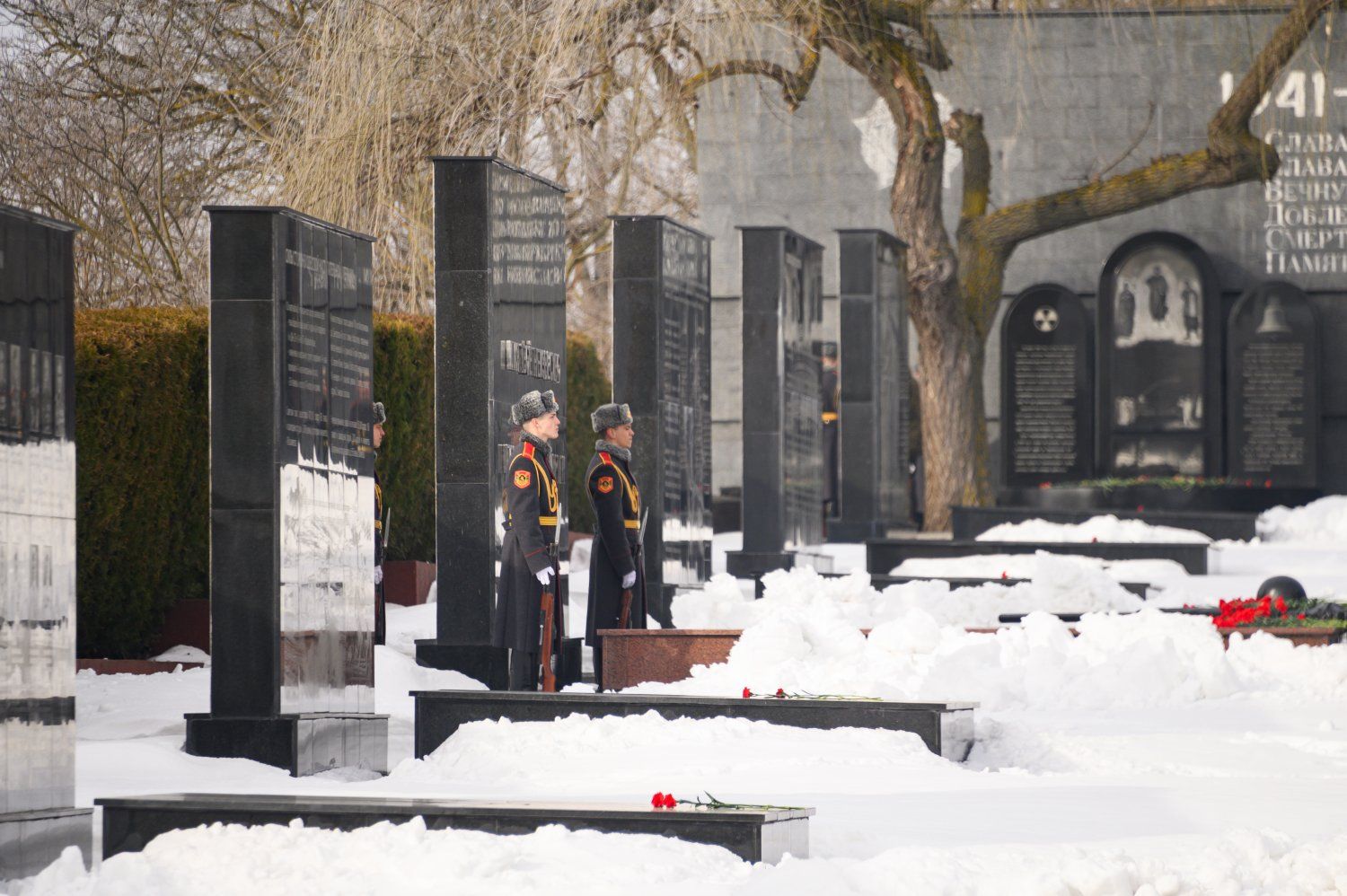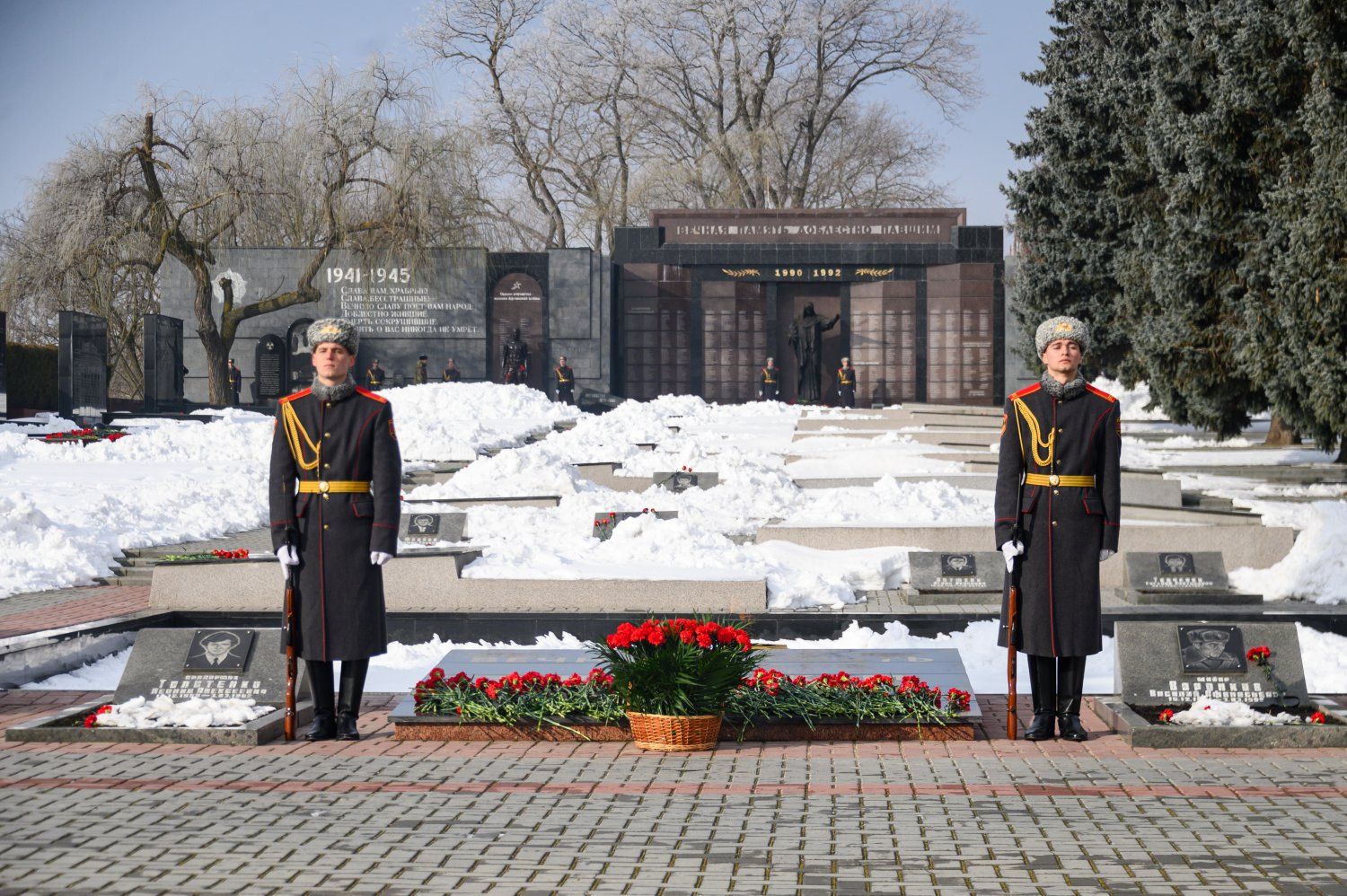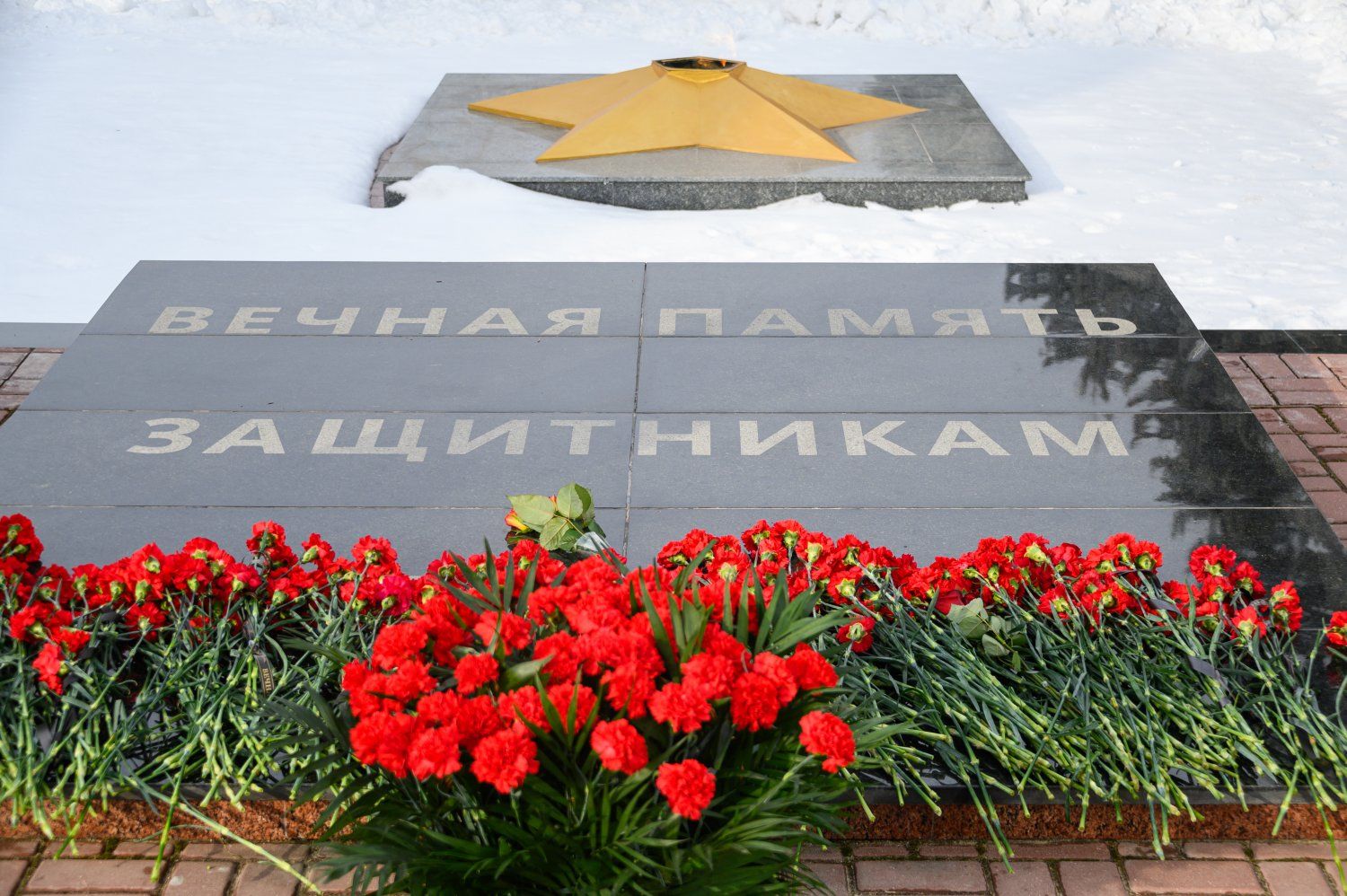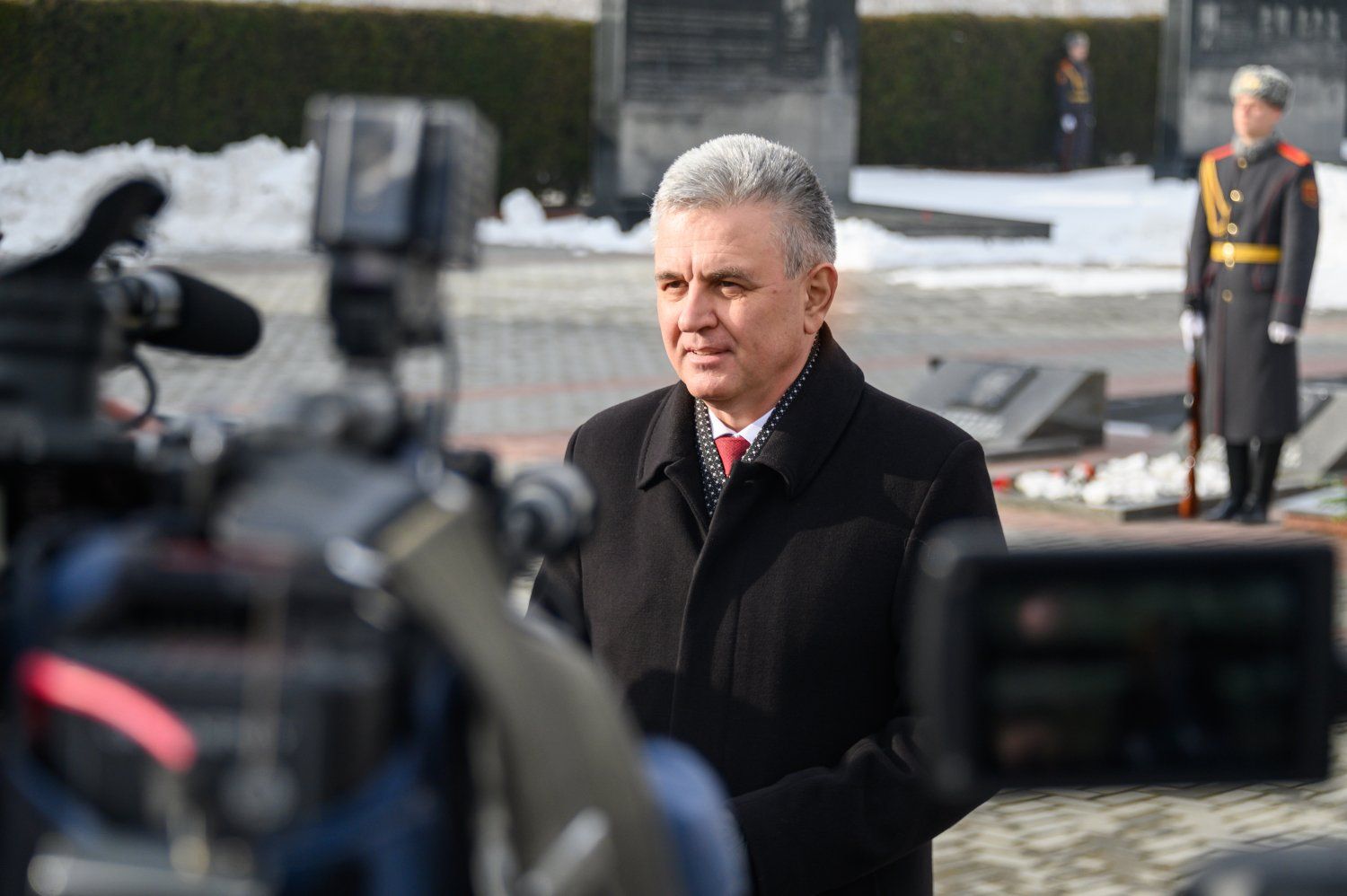
The President took part in a wreath-and-flower-laying ceremony at the Eternal Flame, gravestones, and monument pedestals at the capital's Glory Memorial. This ceremony, marking Defender of the Fatherland Day, has been held there annually for over half a century. The Glory Memorial was opened in Tiraspol on February 23, 1972.
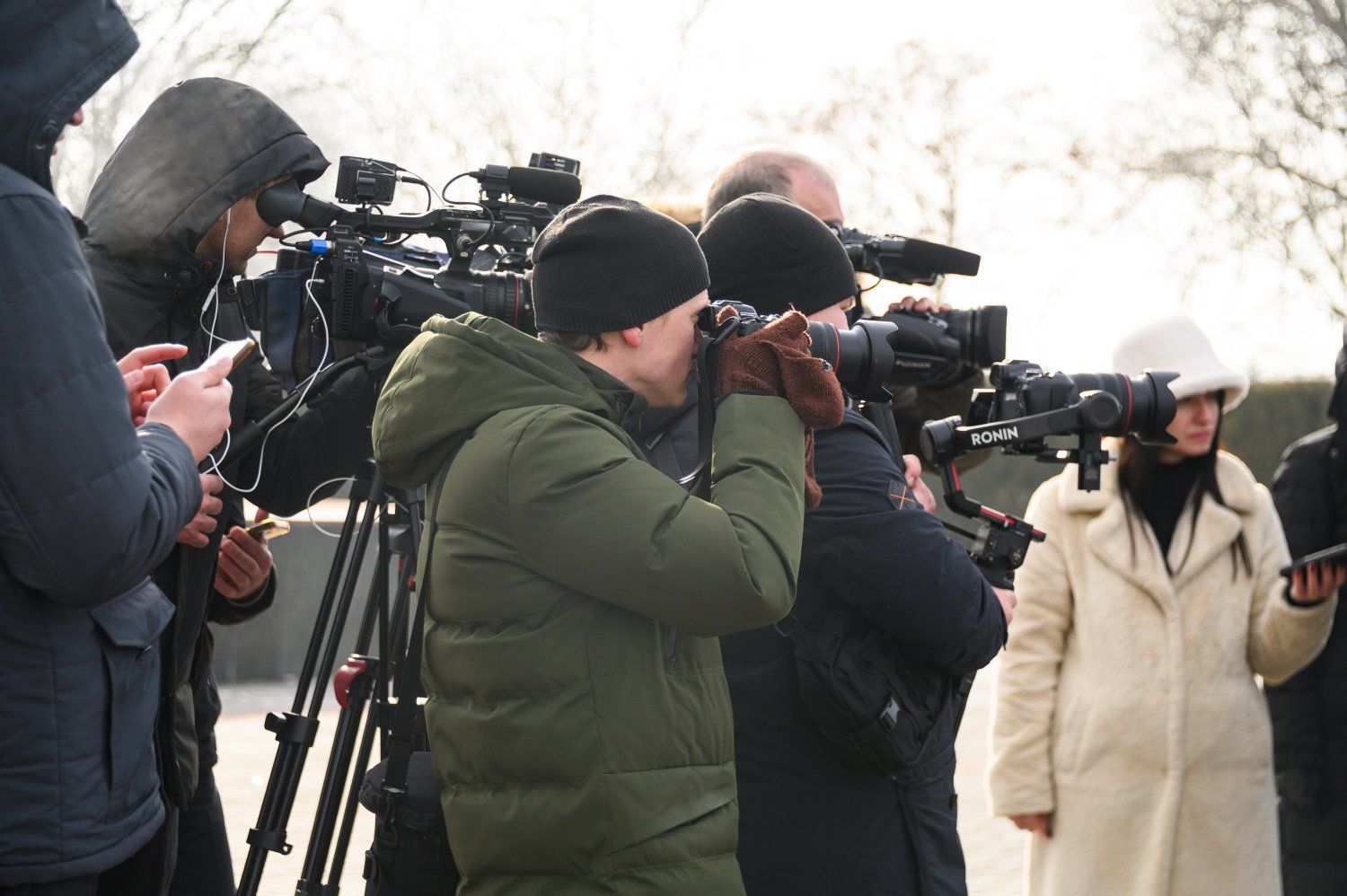
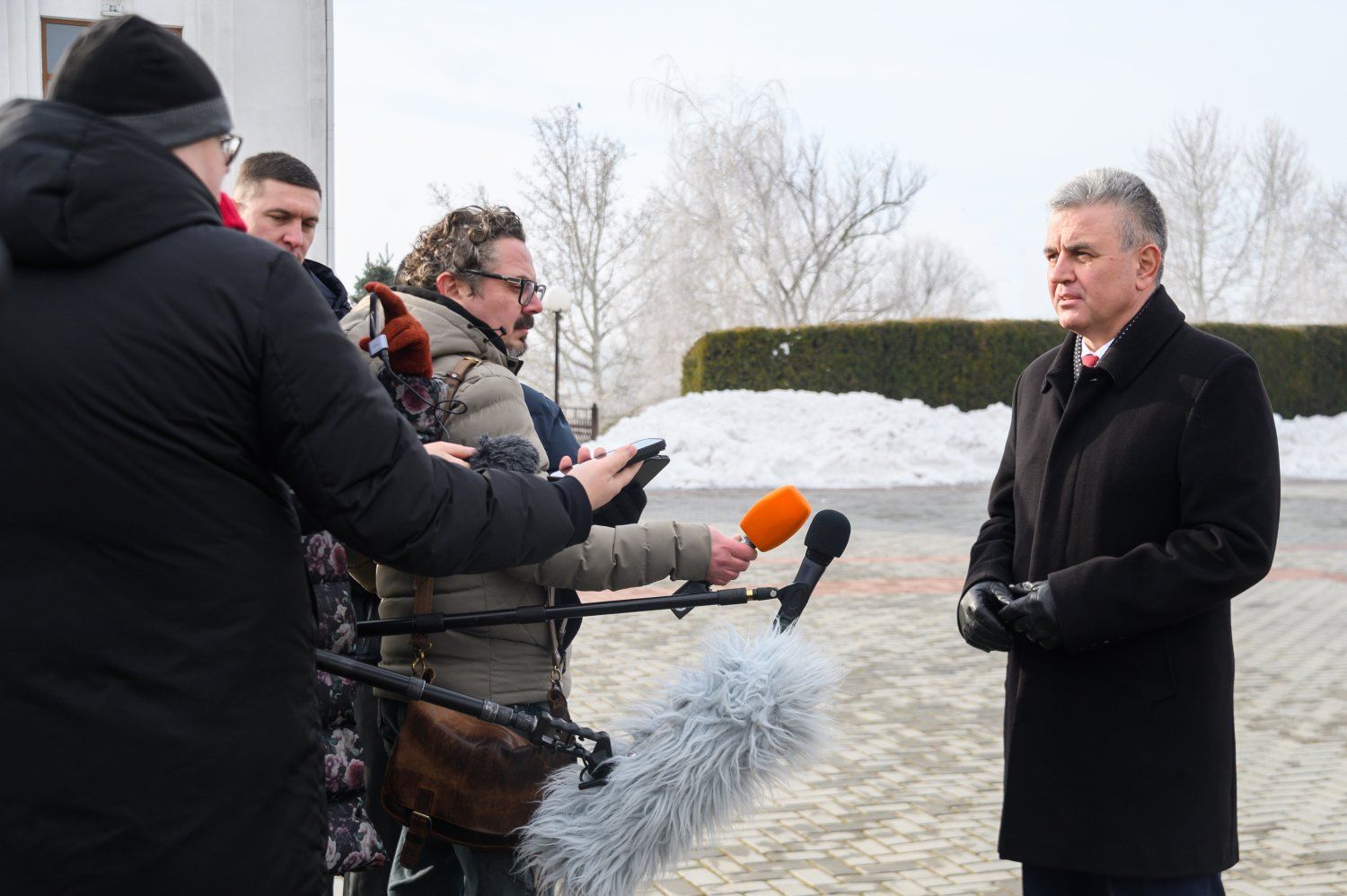
Following the ceremony, Vadim Krasnoselsky spoke with media representatives. Answering a question about who he considers a defender of the Fatherland, Vadim Krasnoselsky emphasized that every person, to one degree or another, within their competence, and to the best of their ability, participates in the defense of the Motherland. The President noted that Pridnestrovie has a rich military history, and memorials, including the one in Tiraspol, are the final resting places of those who died defending the Fatherland at various times. Speaking about the defenders among his family members, Vadim Krasnoselsky said, "Who do I think about? Well, of course, I think about my grandfathers, great-grandfathers, my father – they didn't live to see these days, but they left their mark on the defense of their Fatherland, their Motherland".
The journalists addressed the current peacekeeping and security situation in Pridnestrovie. They asked about the significance and prospects of maintaining the peacekeeping operation on the Dniester in its current joint Pridnestrovian-Moldovan-Russian format. They also inquired about Vadim Krasnoselsky's opinion on proposals to replace the mission with a so-called civilian format. "I assume that those who are declaring the need for an immediate withdrawal of Russian peacekeepers don't know the history of this conflict. Let me remind you how peacekeeping began here. The peacekeeping mission is trilateral. It involves Russian peacekeepers as the core component, along with peacekeepers from Pridnestrovie and Moldova. The peacekeeping operation began after the war unleashed by Moldovan nationalists against the Pridnestrovian people, which resulted in numerous casualties hundreds killed and extensive material damage to cities and districts of our republic. Before the active phase of hostilities began on June 19, 1992, there were observers in Bendery, a so-called commission of civilian observers, the kind now widely discussed by European politicians, who propose replacing the peacekeepers with some kind of civilian mission under the auspices of the OSCE or whoever. Well, that so-called civilian mission failed to fulfill its function. It disbanded. Then, Pridnestrovian troops, guards, and militia escorted them from Bendery to Tiraspol under fire. That was the story of our conflict, our war. They didn't even bother to write reports on the outbreak of hostilities or document the actions of the criminal Moldovan regime at that time. This is the result of a so-called civilian mission that is affiliated, essentially carrying out orders from somewhere above. This is what you need to know.
There's no need to rewrite history; it exists. What makes one pause is the lack of a legal assessment of the 1992 war on the part of Moldova. There's no legal assessment. The names of those who gave the order for Moldovan armed forces to invade Bendery or Dubossary are not mentioned. After all, it wasn't so-called police forces that entered to maintain constitutional order. No. Mobilized Moldovan armed forces entered. Someone specifically gave them the order. There was the president, the minister of defense, and other officials who could be held accountable for this fact. They should be held accountable, given a legal assessment. Moreover, the day before the invasion (this is something European politicians should also know) – June 18, 1992 – the Moldovan parliament passed a resolution calling for an exclusively peaceful, negotiated settlement of the Pridnestrovian issue. The city was unblocked after this decision, the posts were removed – and the invasion took place the following day. The civilian observer mission dispersed. After the city burned, people died, civilians were killed, and after the peace agreement between Moldova and the Russian Federation was signed in the presence of Pridnestrovian President Igor Nikolaevich Smirnov, a decision was made to deploy peacekeeping forces to our territory. So a trilateral mission began: Russian peacekeepers, Pridnestrovian peacekeepers, and Moldovan peacekeepers. What can we say about the results? Peace. Peace on Pridnestrovian soil, peace in the region as a whole. No lives lost. That's the most important thing. That's the result. It's a fact. Therefore, the Pridnestrovian people as a whole highly value the role of peacekeepers on our soil and thank them for the peace they have preserved here".
The PMR President was asked about public statements by Moldovan officials about a convergence fund. Vadim Krasnoselsky responded that no initiatives regarding its creation had been discussed with Pridnestrovie. “So far, these are all empty words, high-flown, and largely populist. I don’t know of a single example in life where issues were resolved outside the negotiating table. Negotiations must take place in any case. Slanted, lame, direct, with or without intermediaries but they must take place. It’s simply an axiom that doesn’t need proof. Any diplomat will tell you this. As for the funds, well, you know... I would even suggest where to direct the resources of this fund. Well, let’s say, the wastewater treatment facilities, which are in critical condition. This is directly related in Moldova, but here too, they require repairs. Or, for example, in Suklea, we want to create a center for people with special need. That is, social facilities. There are infrastructure facilities, including critical ones, that require investment. In principle, we are not against it. I assume they want to direct funds somewhere at their own discretion in some populist manner. That’s wrong. Firstly, no one has abolished corruption. And everything requires control over the spending of any funds. We're proposing specific projects with specific targets where investment can be made and results achieved. Therefore, if the politicians who are making these announcements are willing, they can consider how they'll do it and why," Vadim Krasnoselsky responded.
The PMR President stated that no issue can be resolved without a full, equal negotiation process.